Key points
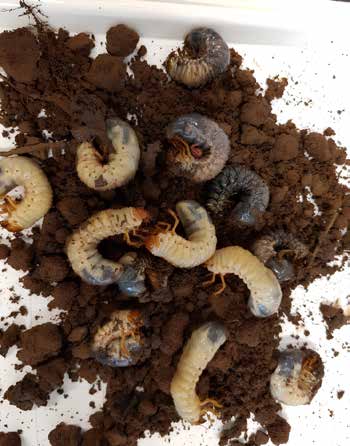
- Imidacloprid is widely used in Australian sugarcane farming to control cane grubs, but residues pose risks to soil and water. There is a need for more efficient delivery systems that reduce the amount of pesticide applied while still controlling pests.
- Controlled-release formulations can reduce insecticide losses and reduce the amount needed. Low-cost, locally available clay minerals (halloysite and montmorillonite) show promise as carriers for these formulations.
- Laboratory testing showed that clay-based beads can hold high amounts of imidacloprid and release it slowly over time.
- Further research is needed to test how well these formulations control pests in the field, how they behave in different soils, and how imidacloprid residues break down over time.
The challenge
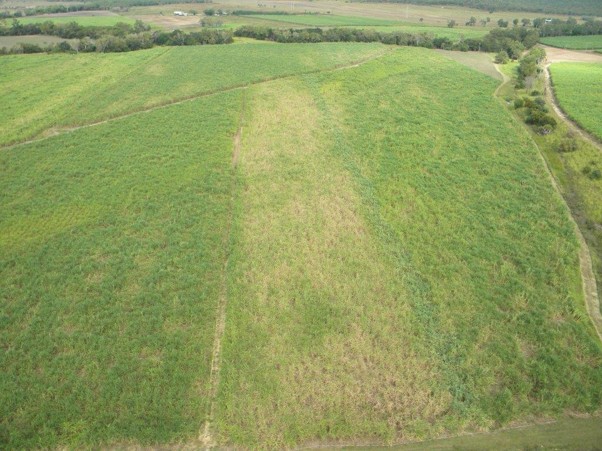
Pesticides have an important role in Australian agriculture, controlling pests that cause significant crop losses. However, more than 90% of applied pesticide is often lost through runoff, leaching, volatilisation and degradation. This reduces pest control effectiveness and leaves pesticide residues that pose risks to soils, waterways, broader ecological systems and human health.
Imidacloprid is a pesticide that is widely used by Australian sugarcane farmers to control cane grubs. It leaves persistent residues that raise environmental concerns, yet restrictions on its use would cause substantial productivity losses.
Controlled-release pesticides are one potential solution. By encapsulating active ingredients within carrier materials, controlled-release formulations protect pesticides from premature degradation and reduce the total amount needed. However, several barriers limit their broader use, including:
- limited understanding how well carrier materials can store and release pesticides
- the costs of preparing carrier materials at commercial scale
- gaps in knowledge of how to load pesticides into carrier materials and control how fast they are released
- the variety of soil types across Australian sugarcane regions, which affects release behaviour
- a lack of field-scale evaluation of pest control efficacy under realistic farming conditions.
Our research
This project (3.2.001) investigated carrier materials that could deliver imidacloprid in a controlled manner for sugarcane farming systems. The work had three main phases: a literature review and workshop, preparing and analysing the carrier materials, and loading and release testing.
Literature review and workshop
The literature review evaluated and compared various materials as potential pesticide carriers, including organic, inorganic and nanoporous materials (materials with many very small holes). The selection focused on four key factors: biocompatibility (materials that do not harm soil organisms or the soil itself), cost, environmental safety, and availability. Clay and silica-based materials emerged as particularly promising. Two clay minerals were selected for laboratory testing: halloysite, which has a hollow tubular structure, and montmorillonite, which has a layered structure.
At the beginning of the project, the project team held a workshop with farmers from the Herbert and Burdekin sugarcane regions to understand their concerns with current imidacloprid application practices and to identify what they needed from a controlled-release product.
Laboratory studies
Preparing the carrier materials
The chosen clay minerals, halloysite and montmorillonite, were treated to improve their ability to hold imidacloprid. Halloysite was treated with acid to enlarge its porous structure, and both clays were treated with organic molecules to improve how well they sorbed (held) imidacloprid. The treated clays were then analysed to see how the treatments changed their structure, surface properties, and capacity to hold imidacloprid.
Loading and release
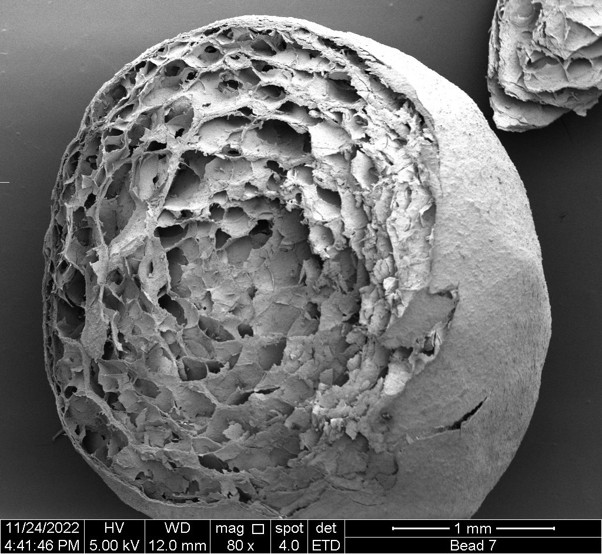
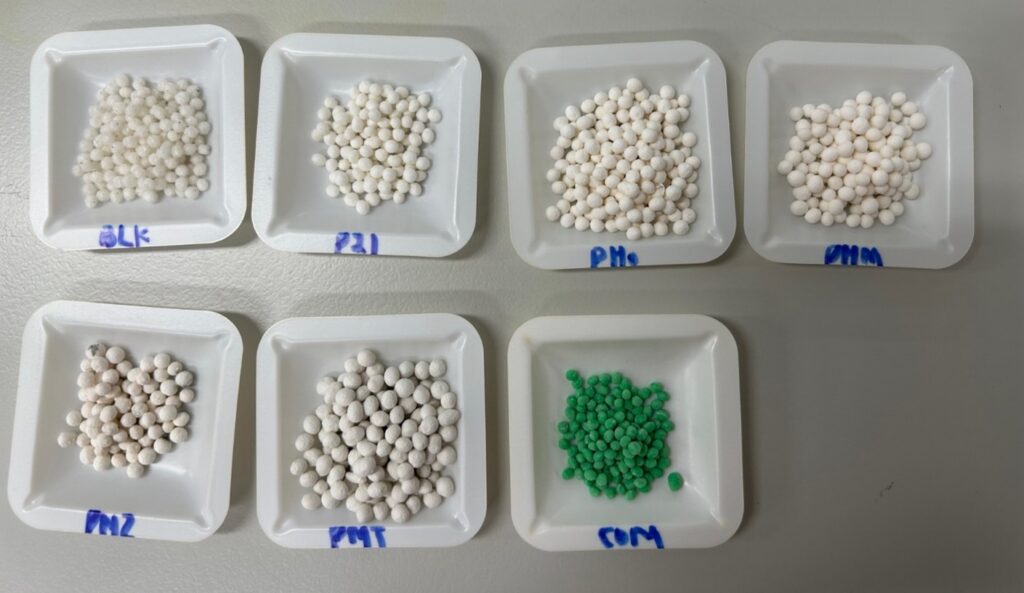
The treated and untreated clays were loaded with imidacloprid, then mixed into polymer beads. The beads were dried using two different methods – freeze-drying and oven-drying – to test how the drying approach affected pesticide release.
Release behviour was tested in two ways:
- Submeging the beads in water and changing the water every one to three days, to measure the rate and amount of imidacloprid release.
- Placing the beads into two representative sugarcane soils (one sandy soil and one clay soil) to measure the rate and amount of pesticide release.
Research findings
Workshop
From the farmer discussions, two key product requirements were established:
- The formulation should consistently release imidacloprid across a wide range of soil pH (4.5 to 8.7), soil temperatures (above 16.5°C), and organic carbon levels.
- To align with the cane beetle life cycle and sugarcane cropping pattern, the formulation should provide sustained release for 5 to 7 months, with an initial lag time of 2 to 3 months.
Laboratory studies
Preparing the carrier materials
Acid treatment enlarged the porous structure of the halloysite, increasing its capacity to hold imidacloprid. Organic chemical modifications improved this further. Both treated halloysite and montmorillonite clays retained their structural integrity after these treatments and showed improved capacity to sorb imidacloprid compared to untreated clays.
Freeze-dried beads maintained better porous structure compared to oven-dried beads, allowing them to hold more pesticide.
Loading and release
Treated clays loaded significantly more imidacloprid than untreated clays. Acid treatment increased loading capacity by approximately 60%, and organic modification improved it further. When these treated clays were incorporated into polymer beads, the final product held up to 40% imidacloprid by weight.
In water, the beads released imidacloprid over 15 successive cycles, with a high initial release followed by decreasing amounts in later cycles. The drying method used during bead preparation affected release patterns: freeze-dried beads released more pesticide initially, while oven-dried beads released pesticide more gradually over a longer period.
In soil, the beads released imidacloprid gradually, with less than 10% released over 8 weeks. Release varied by soil type, with more pesticide released in the sandier soil than in the clay soil. Freeze-dried beads released more than oven-dried beads.
The beads showed similar release patterns to a commercial slow-release product but released more pesticide due to their higher loading capacity.
Significance of the findings
This project demonstrated that low-cost, locally available clay minerals can be effective carriers for controlled pesticide delivery. Using these materials instead of commercial alternatives reduces production costs and makes the technology more accessible to farmers.
The developed formulations held more imidacloprid than commercial slow-release products and released it in a controlled manner over extended periods. This could reduce the total amount of pesticide needed in the field, thereby lowering chemical inputs and minimising residues in soil and water.
These results open opportunities for local manufacturing and commercialisation of pesticide formulations that are both cost-effective and environmentally responsible.
Next steps
The research has produced carrier materials suitable for controlled release of imidacloprid, but further work is needed to translate this into practical field application.
Field trials are required to evaluate how well the encapsulated imidacloprid controls sugarcane grubs under real farming conditions. The behaviour of imidacloprid and the carrier materials need to be tested across the different soil types found in Australian sugarcane regions. Understanding how imidacloprid residues break down in soil over time is critical for environmental safety.
Collaboration with farmers will be essential for conducting pest control studies in representative farming systems. These trials will help refine the material formulations and demonstrate efficacy at the field scale. Pilot manufacturing studies are also needed to develop cost-effective production methods and explore commercialisation potential.