
By Felicity Harrop, Soil CRC Adoption Manager
Through our Adoption Plan, the Soil CRC is collaborating with our grower group participants and researchers to deliver a suite of tailored activities and resources focused on extending our project findings to farmers and advisors. These extension efforts are helping the end-users of our research to make more informed soil management decisions.
Webinar recording: Unlock the potential of sandy soils
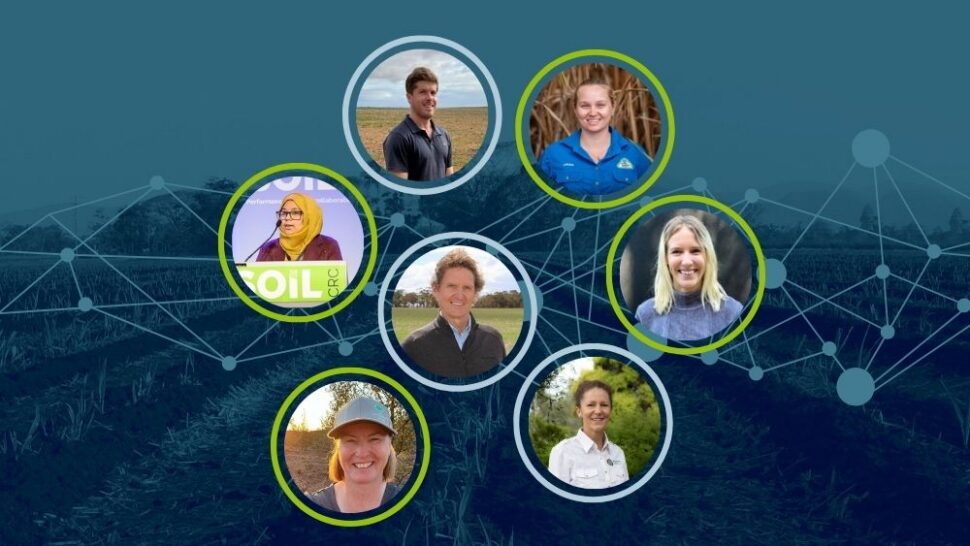
In our May webinar, Soil CRC researchers Dr Richard Bell (Murdoch University) and Dr Amanda Schapel (PIRSA), together with PhD students Stephen Lang (Adelaide University) and Dr Tania Monir (previously of Murdoch University), shared the latest findings on improving sandy soil performance — a challenge affecting millions of hectares of farmland.
The webinar explored why sandy soils underperform (low water-holding capacity, nutrient leaching, compaction) and examined a range of amendments including subsoil clay, compost, biochar, zeolite and bentonite. A meta-analysis revealed that amendment effectiveness depends heavily on sand depth, with organic amendments like compost most beneficial on the deepest sands. The productivity sweet spot for subsoil clay sits at 6–15% clay concentration, and effects can persist for up to 15 years.
Western Australian field trials showed subsoil claying delivered a 50% yield increase over 15 years at Esperance, though yields still fell short of water-limited potential. Emerging research on carbon stabilisation found that combining organic and inorganic amendments (e.g. compost with hydrotalcite) enhances long-term carbon protection in sandy soils.
The next steps include multi-season field validation, optimised amendment formulations, and scalability assessments to bring these findings from research plots to broadacre adoption.
For further insights watch the webinar below and read the ‘New amendments for sandy soils’ research reports.
Podcast explores soil carbon
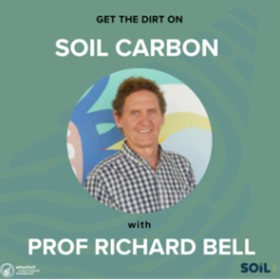
Wheatbelt NRM has released a second Soil CRC-supported podcast, featuring Dr Richard Bell (Murdoch University), discussing Soil CRC project ‘New farming methods to sequester soil carbon’ (4.1.006) at three Western Australian sites.
This episode explores:
- Soil organic carbon management
- Crop sequencing and new technologies to assist soil carbon storage
- Soil health benefits and productivity related to the new farm practices.
Thanks to host Aimee Mouritz, Wheatbelt NRM’s Sustainable Agriculture Facilitator, and Richard Bell for an informative discussion. Listeners can tune in to Get the Dirt on Soil Carbon with Professor Richard Bell — Wheatbelt NRM Resources Hub, with project reports available here .
Video highlights soil biological testing
Burdekin Cane Productivity (BPS) has released a video featuring NSW DPIRD’s Dr Kattie Weigh explaining soil biological indicators. Kattie recently presented results from the Soil CRC’s ‘Measuring soil microbes’ project (2.1.008) to the Burdekin community and BPS took the opportunity to film this video while she was there.
Jasmine Girgenti, BPS Specialist Agronomist, asked Kattie to explain soil biological indicators, and available tests to measure soil health.
Watch the video below to learn more.
Watch the video
Knowledge Hub resources growing week by week
Here is an overview of four new research findings fact sheets that are available online at the Soil CRC Knowledge Hub.
Enhanced nutrient recovery from food waste anaerobic digestate – this important study by PhD graduate Dr James O’Connor (University of Western Australia) investigated how food waste biofertilisers affect soil chemistry, nitrogen dynamics, gaseous emissions from the soil, and crop growth and yield. It highlights the potential of novel fertilisers developed from acidified digestate to benefit agriculture and the environment. Links are provided to presentations and research papers related to the project.
Evaluating the role of ecosystem processes in the enhancement of soil carbon stocks and functional resilience – this research led by Dr Mehran Rashti (Griffith University) highlights soil management opportunities for supporting healthy soils to withstand tough conditions, like drought, flood or compaction, and recover quickly to reduce potential negative impacts on productivity. Research findings include a literature review, field assessments and laboratory experiments which provide evidence that sustainable management practices like cover cropping and minimum tillage can improve soil resilience. The knowledge generated is valuable for those working to rebuild stressed soils and improve productivity and profitability. Links are provided to presentations and research papers related to the project.
Matching soil performance indicators to Australian farming systems – Discover how to better measure what matters in your soils with this practical fact sheet linking performance indicators to real Australian farming systems. Gain research-backed insights to support smarter decisions, improve productivity, and build long-term soil health.
More profitable crops on highly calcareous soils by improving early vigour and overcoming soil constraints – Unlock the potential of highly calcareous soils — covering around 60% of cropping soils in south‑eastern Australia. Discover practical strategies that can lift biomass and yield (with trials showing up to 22% increases in biomass from high seeding rates), helping boost productivity in challenging conditions.