Key points
- Australian agricultural research often fails to reach the farm. The traditional top-down model, in which researchers develop solutions and pass them to farmers, leaves a gap between what research produces and what farms adopt.
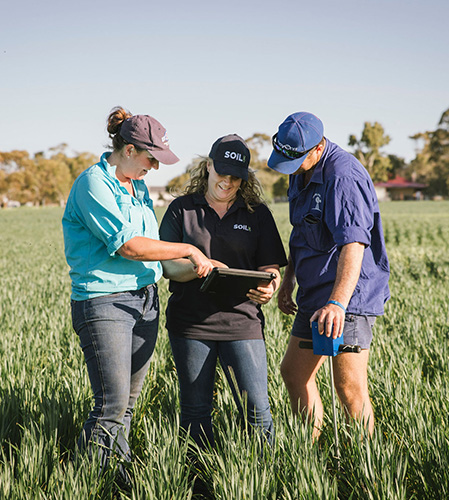
- Farmer-led innovation offers an alternative, positioning farmers to help shape new practices from the start rather than receiving them at the end. Across Australia, the Soil CRC has 20 farmer group partners who play a key role in connecting farmers and research.
- This Soil CRC project trained an Innovation Manager in five of its farmer groups to build a system for generating, developing, testing and adopting soil management innovations.
- Most farmer groups were already skilled at developing and rolling out innovations to their members, but few ran a deliberate process for generating new ideas with their farmers.
- Where a group had enough time and support, it produced measurable improvements, including redesigned member services, new strategies built around innovation, and at least two innovations reaching early-stage implementation.
The challenge
Good soil management depends on farmers adopting new practices and technologies, yet much agricultural research never reaches the farm. Traditionally, researchers have developed solutions and passed them down to farmers, but this has failed to close the gap between what research produces and what farms adopt.
Farmer-led innovation is an alternative method. It positions the farmer as the initiator or “ideator”, the “early tester”, the co-developer and ultimately the adopter of new practices, rather than the recipient of practices developed by others.
Our research
This project trained an Innovation Manager in five farmer groups, alongside an agribusiness or research and development partner, to design and implement an innovation system comprising four stages:
- Generating ideas (ideation)
- Defining and selecting projects
- Running those projects
- Scaling up or commercialising the result (adoption).
Each Innovation Manager took an innovation idea through an AgriTech incubator to progress an innovation related to improving soil stewardship.
This project extended an earlier Soil CRC project (1.4.002, Phase 1), which worked with five farmer groups (Central West Farming Systems, Riverine Plains, Herbert Cane Productivity Services, Agricultural Innovation & Research Eyre Peninsula, and Birchip Cropping Group) to build the systems, capability and culture of those groups and establish the approach that Phase 2 went on to refine.
Over 18 months, Phase 2 established similar partnerships with four new farmer groups (Soils for Life, Southern Farming Systems, Holbrook Landcare Network and Facey Group) and one continuing group (Birchip Cropping Group), adding the requirement that each work with a partner such as an agribusiness or research and development provider to accelerate an innovation targeted at improving soil stewardship.
A Systems Innovation Intervention Framework (SIIF), a method Pitt and Nelle (2008) developed to build innovation partnerships with large for-profit agribusinesses, was applied to inform the development of the innovation partnership approaches applied in Phases 1 and 2 of the project. The framework works through repeated cycles of plan, act, observe and reflect:
- Planning and acting – maps where an organisation’s innovation system is failing and designs interventions to address it
- Observing – draws on participant feedback and early results
- Reflecting – captures what each participant has learned.
Each Soil CRC phase formed one cycle, with Phase 1 as the first cycle and Phase 2 as the second cycle, and adapted the model from its agribusiness origins to the context of farmer groups.
An independent evaluation drawing on eleven interviews assessed the program’s delivery and the changes that resulted from it.
Research findings
The most important finding reversed the project’s starting assumption. The standard innovation model was built for large agribusinesses, many of which did not treat innovation as central to their business and needed significant co-investment to offset the risk of building that capability. However, farmer groups exist to generate and deliver innovation for their members. Most had staff skilled in innovation and a culture open to new ideas, and were already running the later stages of an innovation system: defining and selecting projects, running them, and taking results to adoption. For most groups, the program clarified that purpose and improved the design of their business model rather than building capability from nothing. In the evaluation, several groups reported that the process helped them see themselves as innovative organisations and refine how they operate.
Because the standard innovation partnership model was designed primarily for for-profit commercial ventures, it was a poor fit for small, project-funded groups. One participant described a major agri-innovation event as overhyped and disconnected from working farmers, and others found the incubator’s emphasis on pitching to investors of little use to a not-for-profit group. Placing a whole program on one staff member also posed a real risk for a small organisation.
Idea generation
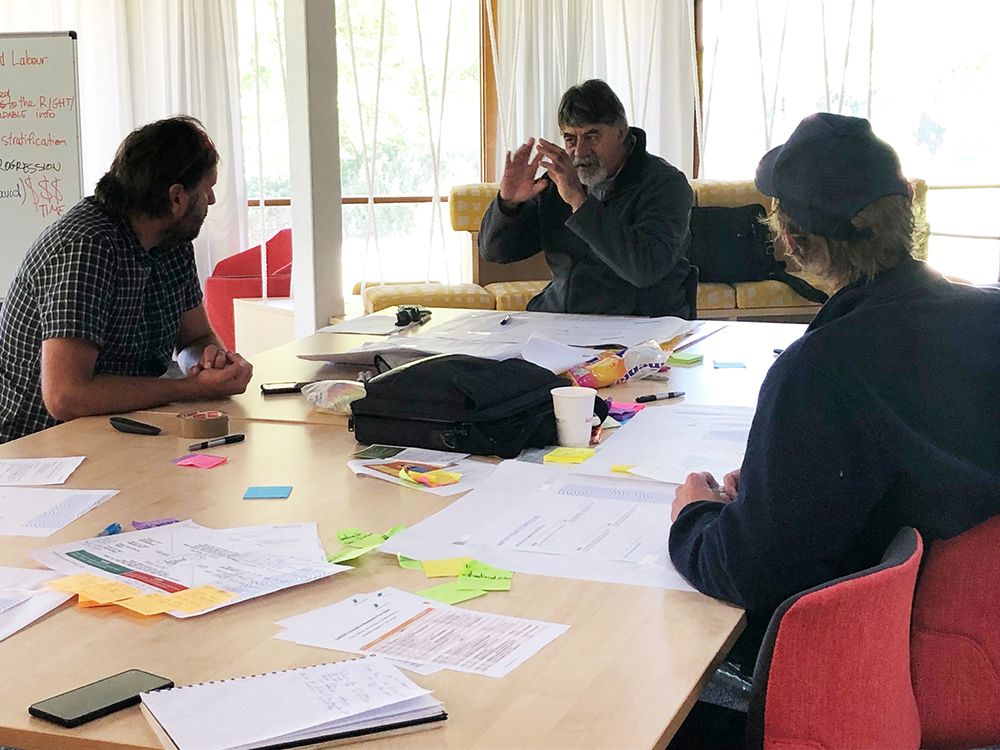
The one consistent gap across participating farmer groups was in generating ideas. Most farmer groups had clear structures for stages 2 to 4 of innovation (defining and selecting projects, running them, and taking results to adoption). However, in seven of the nine groups, planned activities to generate ideas with farmer members or service providers were limited. One group found that asking farmers at meetings what they needed mostly brought up problems in the current season, such as waterlogging, and concluded that its method for collecting ideas was not working.
Reliance on external project funding helped to explain why idea generation has been neglected. To hold a viable scale of operations, many farmer groups had become research, development or extension providers, delivering other organisations’ projects rather than leading innovation for their own members. Two groups found that service providers and consultants drove new ideas and adoption as much as their farmer members did.
Impact
The independent evaluation found that all but one participant reported benefits from the program. One group redesigned a service its members rely on, then tested the change with a panel of farmers who confirmed the improvement. Another rewrote its organisational strategy around innovation and leadership. Groups also reported sharper strategic planning and stronger skills. Innovation Managers valued the peer cohort most, rating the chance to compare approaches with other groups above the formal training materials.
Duration and structure affected how far groups could progress. In Phase 1, 12 months covered setting up the innovation system and generating ideas but left too little time to develop any ideas into defined projects. In Phase 2, 18 months and a follow-up incubator project carried two innovations to early-stage implementation.
Learnings for the future
- Long investment programs such as a CRC should establish farmer group innovation partnerships at the outset. Groups can then help shape which research is commissioned, giving it a greater chance of being adopted in the future.
- Beyond CRCs, farmer groups need durable funding and support, since they are a critical link to the wider farmer market for agricultural technologies.
- Farmer groups depend on short-term project grants, which pushes them toward delivering other organisations’ work rather than their own innovation. Sustained funding for their core capability, not just for individual projects, would let them lead innovation for their members.
- Innovation requires investing staff time and money in ideas that may fail, a risk a small group cannot easily absorb. Programs should share that risk, so groups can trial and discard ideas without threatening their finances.
- Farmer groups should be encouraged to form structures that support their collective development and their position in the research and development system.
Significance of the findings
The project demonstrated that farmer groups already possess the capability to innovate. Because they already run most of the innovation process, strengthening the one part they lack – generating ideas with their farmers – will make them a more effective route to adoption.
Soil CRC research outputs have been sorted, packaged and presented as source material for facilitated idea-generation sessions that farmer groups run with their members and service providers, converting existing research into practices that farmers adopt. This has been achieved with support suited to how farmer groups operate, funding that extends beyond a single project, and provision for the risk that innovation carries.
Next steps
The Soil CRC’s ‘Accelerator Program’ (project 1.4.007) builds on the findings of this project to accelerate the translation and adoption of our research by involving farmer groups in identifying, filtering and progressing research outputs.
Led by Southern Farming Systems, the project has developed a practical Framework for Accelerated Translation of Research, providing a legacy model for future CRCs and other agricultural research and extension programs.