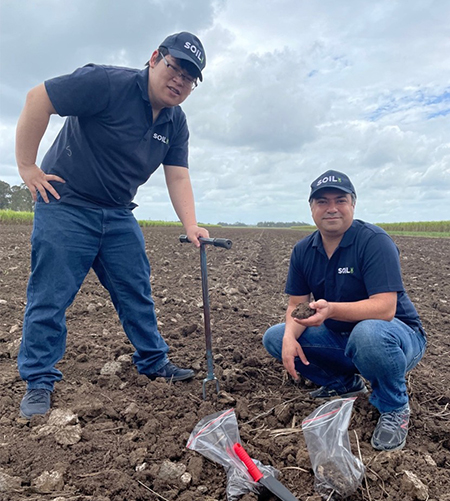
The environmental disturbance of agricultural soils has received significant attention in recent years, due to its impact on soil microbial activities as well as associated crop yield and soil health decline (a healthy soil has the continued capacity to supply plants with adequate and balanced nutrients, water and air as a complex biological system in a disease-free environment). However, the responses of soil microbial community to compaction and drought stresses are largely unknown. Therefore, a robust, cheap, and easy-to-understand index needs to be developed in monitoring soil microbial community responses to compaction and drought as current mainstream soil health indicators are expensive and complicated for end users.
This project was designed to address a specific industry problem related to lack of practical methods for assessment of soil resistance and resilience to environmental stresses (compaction and drought) in agricultural lands. The project aimed to provide an improved process-based understanding of relationships among compaction and drought stresses and soil resilience and functionality in different farming systems. In this project, soil resistance is defined as the ability of a soil to maintain its functional stability after a disturbance, while soil resilience is defined as the speed with which a soil system can return to its pre-disturbance conditions.