Key points
- Soil nutrient testing in the laboratory is accurate, but slow and expensive. Field test kits are quicker and cheaper but give only approximate results and are influenced by user judgement.
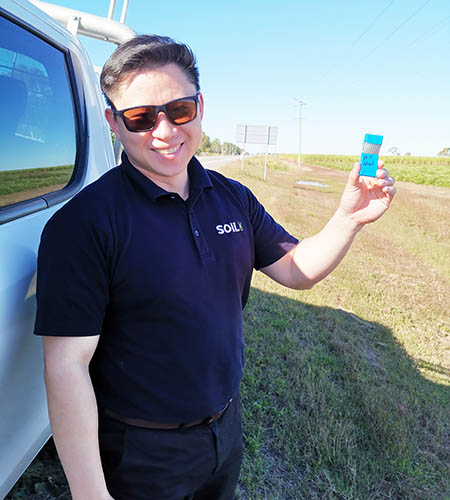
- This project developed a small 3D-printed device that works with a smartphone to measure soil nutrients in the field.
- The device produced accurate, consistent readings for nitrate. However, pH and phosphate measurements were less reliable and require further work.
The challenge
Accurate soil nutrient data allows farmers to match fertiliser inputs to soil and crop requirements. However, currently available soil test methods require a trade-off between analytical precision and practical application.
Laboratory analysis provides accurate, quantitative results, but depends on costly instruments, trained staff, and extended turnaround times. For most farming operations, these constraints make regular soil monitoring economically unfeasible, which limits the capacity to track changes in nutrient status and respond as soil conditions change through the season.
In-field test kits address the constraints of cost and turnaround but offer considerably lower precision. Most are colourimetric, relying on a colour change to indicate nutrient concentration. The reading depends on the user’s colour perception and on how well they prepare the sample, both of which introduce variability – the same sample can give different results depending on the operator. These kits also report an approximate concentration range rather than a quantitative value, which provides insufficient precision to guide fertiliser decisions.
In-field soil testing would allow farmers and agronomists to assess soil nutrient status in the field and make immediate, evidence-based decisions on soil management and fertiliser use, without the cost and time of laboratory analysis or the imprecision of existing field test kits.
Our research
This project set out to develop a rapid, accurate and low-cost way to test soil chemical properties in the field, focusing on nitrate, phosphate and pH.
Development focused on:
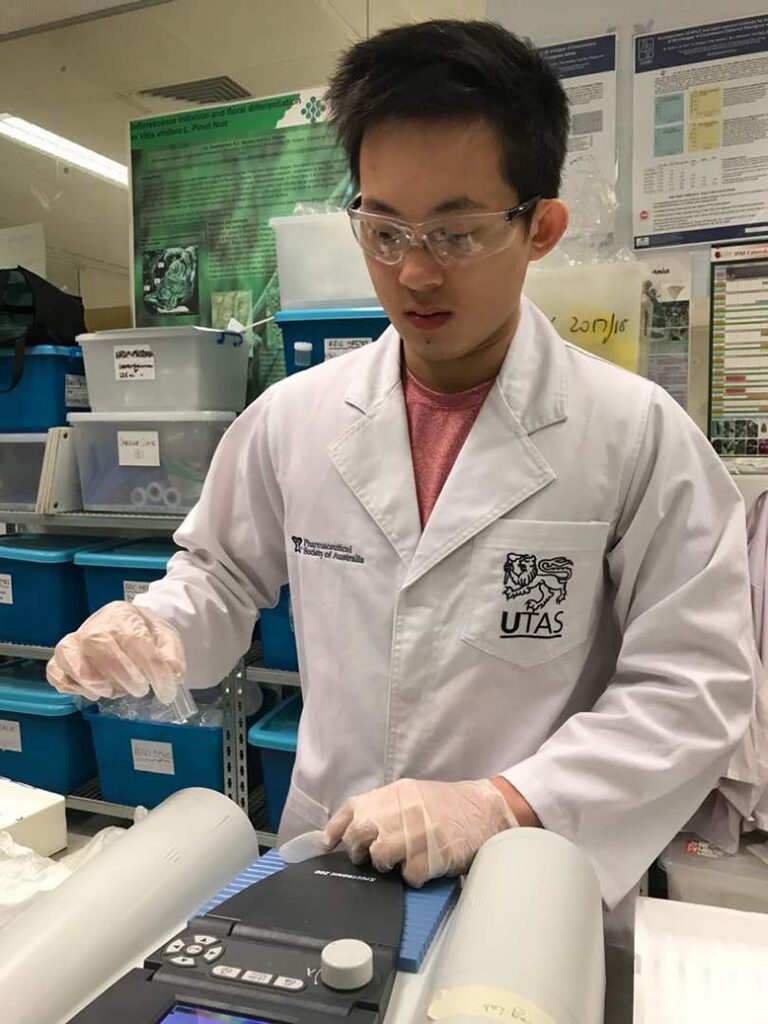
- Designing and fabricating an in-field testing device.
- Developing reagents that stay stable when stored and used in the field.
- Building a smartphone app to read and interpret the results.
- Developing a soil preparation protocol so that samples are prepared consistently and readings are comparable across different samples and operators.
- Establishing a cleaning protocol to keep the device working reliably between tests.
Research findings
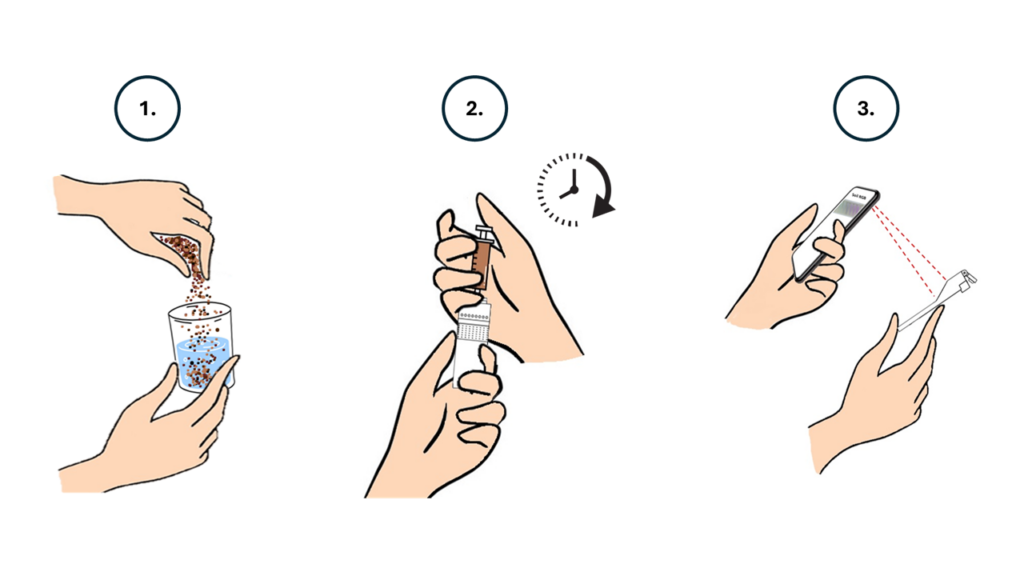
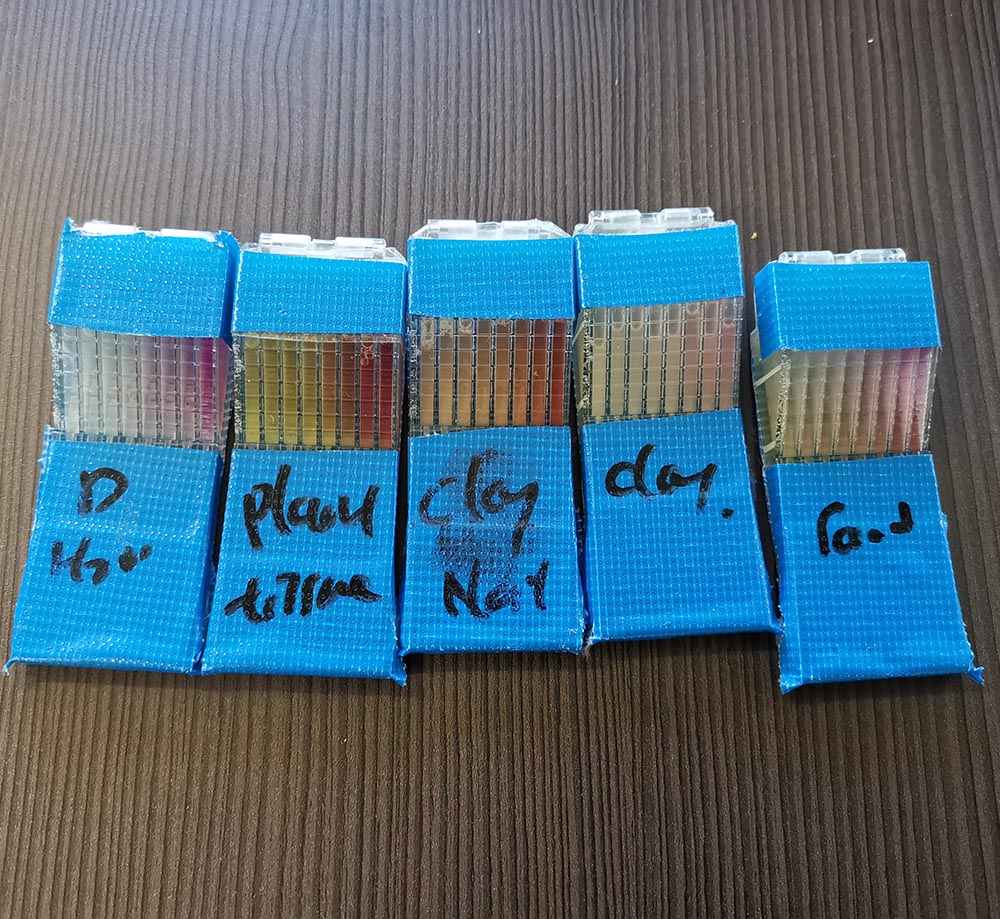
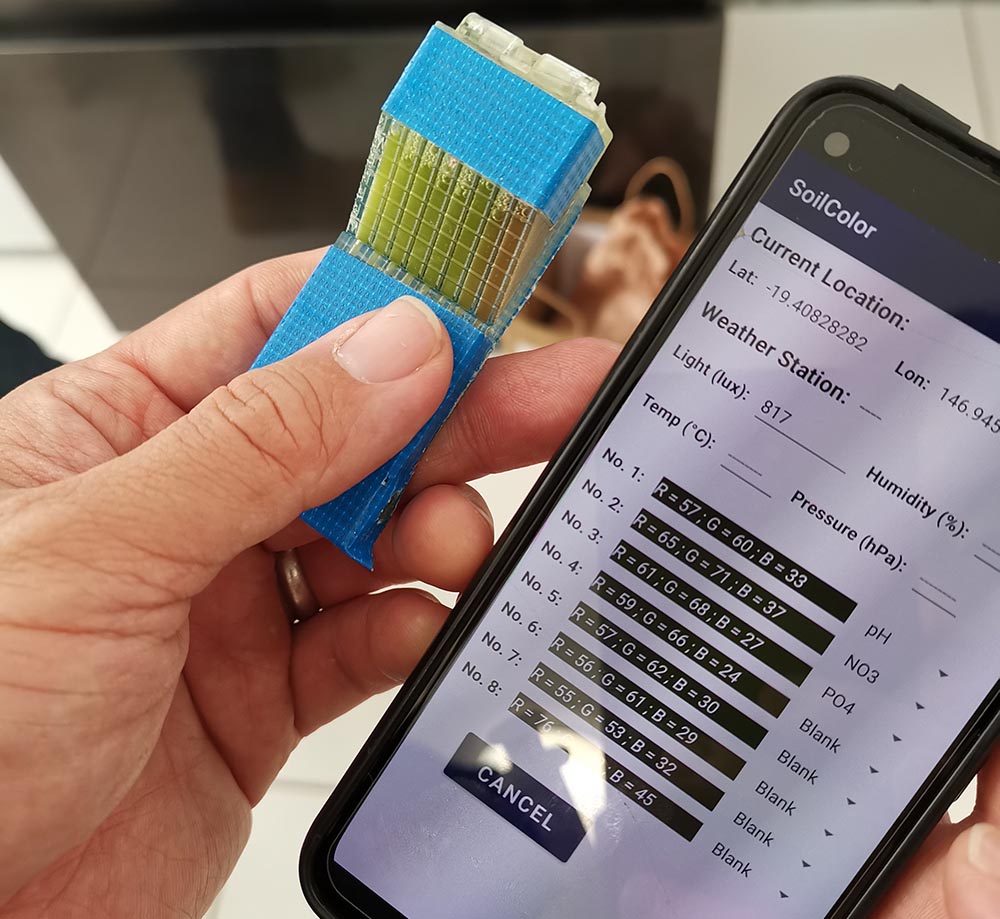
The team designed and built a small, 3D-printed device (a micro-fluidic chip) that works with a smartphone app to give quantitative soil results on site. A prepared soil solution is drawn into the device, where it mixes with reagents that react with each nutrient to produce a colour. The purpose-built smartphone app photographs the colour and reads it as RGB values, then interprets that reading to determine the soil nutrient concentration (Figure 1).
The device performed best for nitrate. Phosphate and pH measurements were less reliable and require further work.
Two of the design features helped produce consistent results. A set of branching channels splits the incoming soil solution and spreads it evenly through the device. A series of micromixers then blends the solution with the reagents until they react fully and produce an even colour for the app to read.
The team formulated colour-change reagents for each of the three properties and prepared them so they stayed stable when stored and used in the field.
Ambient light can affect the reading. To counter this, the device carries built-in channels of known reference colours. Because the true colour of these channels is already known, any shift in how they appear in the photo shows how the lighting is affecting the image, and the reading can be adjusted to match. The app also judges the result from the overall colour across each channel rather than from a few single points, since a single point may catch a glare or a shadow. Together these keep the result dependent on the soil rather than the surroundings, giving more consistent and reliable readings.
To support consistent results, the team developed a standardised protocol for preparing soil samples, ensuring readings are comparable across different samples and operators. A cleaning protocol was established to maintain device integrity and ensure consistent performance between tests.
Significance of the findings
This project establishes that quantitative soil nutrient testing can be carried out in the field, addressing the trade-off between accuracy and practicality that has constrained existing methods.
For farmers and agronomists, testing in the field allows decisions on fertiliser rates and timing to be made when they are needed, rather than weeks later when results arrive. This has the potential to reduce input costs, improve the efficiency of fertiliser use, and support soil management based on current conditions, with flow-on benefits for crop productivity.
Beyond individual farm applications, reliable soil nutrient data at scale supports broader agricultural objectives. Better information on soil status contributes to more sustainable fertiliser use, reducing environmental impacts. Quantitative soil data also provides evidence of soil stewardship, increasingly required for environmental compliance and sustainable development reporting.
Next steps
The project established that quantitative soil nutrient testing can be carried out in the field, with the strongest results for nitrate. Phosphate and pH detection need refinement to reach the reliability achieved for nitrate. Developing additional reagents would extend the device to further soil nutrients, broadening its use across different soil types and farming systems. Once refined, these methods would need field validation against laboratory analysis across a range of conditions to confirm accuracy. Training materials and user guides would then support correct use and adoption by farmers, agronomists and land managers.
The smartphone app requires further development, incorporating machine learning and computer vision to automate chip recognition and colour interpretation. This would make the reading more consistent across different devices and conditions.
The 3D-printed material absorbs some of the colourant, which limits how often a device can be reused. Moving from 3D printing to injection moulding would resolve this absorption problem and produce more consistent, reliable and reusable devices. It would also open the way to recycling and more sustainable manufacturing.
Some of these issues are being addressed in other projects. A follow-on Soil CRC project (2.2.007) led to the development of a ‘lab-on-a-chip’ prototype for rapid nitrate detection in soil using smartphone imaging. The project optimised the microfluidic chip, improved reagent immobilisation, developed colorimetric analysis algorithms, and validated the device in the field. It also completed cost modelling and commercialisation planning, confirming feasibility for large-scale adoption, and designed a pathway to injection moulding to enable scalability and mass production of the device.
The technology is now being extended through further investment by Queensland’s Department of Primary Industries, managed by Sugar Research Australia. This project is adapting the device for plant-based nutrient assessment in sugarcane and transitions manufacturing from 3D printing to injection moulding which would address the colourant absorption issues seen with 3D-printed material.