
Healthy soil is a living system driven by microbial communities that break down organic matter, cycle nutrients and maintain soil function. When these communities are disrupted by stress, such as drought, soil function declines and recovery can be slow. Soils with higher organic matter, better structure and greater nutrient availability tend to cope better and recover more quickly.
Management practices such as cover cropping and minimum tillage can build soil carbon and improve soil condition over time. However, there is still limited understanding of how these practices influence a soil’s ability to resist stress and recover once conditions improve, and under what circumstances they are most likely to deliver results.
Dr Mehran Rashti from Griffith University led a Soil CRC project (4.1.005) that examined how land management practices affect soil resilience, with the goal of identifying which practices build more resilient soils and under what conditions they are most likely to benefit farmers.
Speaking with sustainable agriculture facilitator Aimee Moritz on Wheatbelt NRM’s ‘Get the Dirt’ podcast, Dr Rashti explained that the project used the concept of soil resistance (the ability of soil to maintain its function under stress) and resilience (how quickly it recovers once that stress is removed) to assess the changes to soil health in long-term Soil CRC field sites.
“We were looking for management practices that were already implemented for a couple of years,” he said.
“With these management practices, the claim is that they can improve yield in good years, but are these management practices resilient to a decline in yield if we are dealing with a bad year?
“We wanted to see how the function of soil microbial communities can resist against these stresses and can be resilient and bounce back if this stress is removed.”
Our research
The management practices studied included cover cropping, minimum tillage, lime application and deep ripping (Bednar) treatments. The project investigated the impact of these practices on microbial biomass, microbial respiration, enzyme activity and plant growth responses.
The research started with a literature review to understand how soil microbial communities respond to drought stress across different land use types, and what soil properties most influence soil resilience.
The project team then collected soil from paired sites in New South Wales, Western Australia, Queensland and South Australia, and measured key soil properties to establish a baseline understanding of how different management histories affect soil health.
The soil was exposed to controlled drought and compaction stresses, at moderate and severe levels. Researchers measured changes in microbial properties during the stress period and after recovery. A glasshouse pot trial also assessed how these stresses affected plant growth and nutrient uptake in soils with different management histories.
Key highlights
- While microbial activity can recover quickly after drought when moisture returns, rebuilding microbial communities takes much longer, highlighting the importance of maintaining healthy soils to improve resilience to future stress.
- Tillage intensity strongly affects soil resilience. Minimum tillage supports higher microbial activity, better nutrient retention and stronger plant growth under drought and compaction, while excessive tillage reduces soil function and recovery.
- Cover cropping increases carbon and nitrogen inputs to the soil, supporting microbial activity and nutrient cycling during drought stress. Combining cover cropping with minimum tillage gives stronger improvements in nitrogen retention, and plant growth and recovery under drought stress.
- Lime application improves soil pH, supporting more active microbial communities and increased available nitrogen. It shows potential for improving resistance to moderate drought stress and supporting recovery after stress.
- The Bednar treatment maintains stable microbial processes and supports higher microbial biomass carbon and nitrogen. Its effects on microbial activity are variable across conditions.
What comes next
This project lays the groundwork for practical tools that farmers and advisors can use on the ground.
In the longer term, this work will contribute to developing soil resilience assessment tests and decision support tools that farmers can use to monitor soil health and guide management decisions across different cropping systems. These tools will have broad application across Australian agricultural industries and grower networks.
Project publications
Related resources
- Wheatbelt NRM podcast (2026): Get the dirt on soil resilience with Dr Mehran Rashti (4.1.005)
- Wheatbelt NRM fact sheet (2026): Building and testing resilient soils
- Webinar (2023): Evaluating soil functional resilience to compaction and drought (Project 4.1.003)
- Webinar (2020): Evaluating soil resilience to drought and compaction (Project 4.1.003)
Project participants
- Griffith University
- NSW Department of Primary Industries and Regional Development
- Central West Farming Systems
- Herbert Cane Productivity Services
- Soils For Life
- Facey Group
- Primary Industries and Regions South Australia
- Australian Organics and Recycling Association
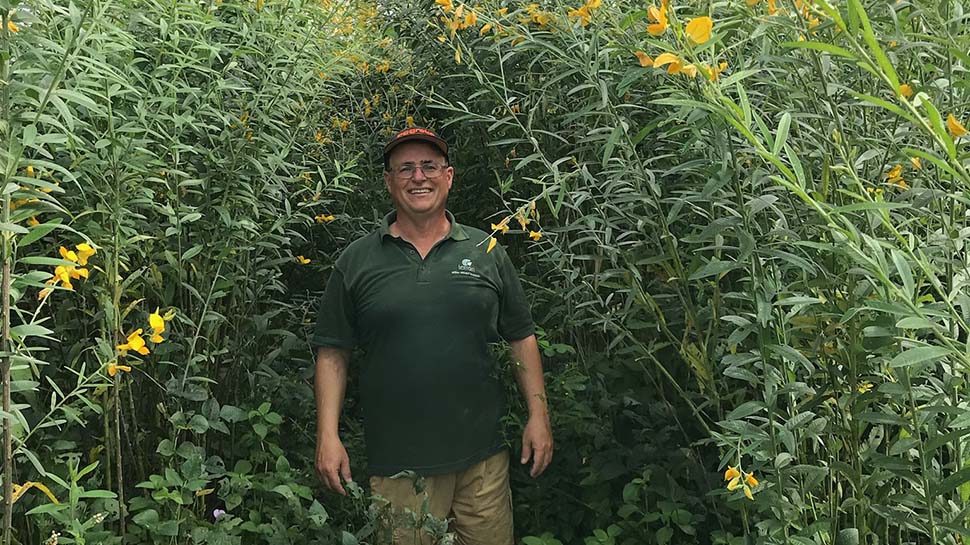
Main image: Lawrence Di Bella (previously of Herbert Cane Productivity Services) standing in a cover crop on a Queensland sugarcane farm.