The challenge
Pesticides have an important role in Australian agriculture, controlling pests that cause significant crop losses. However, more than 90% of applied pesticide is often lost through runoff, leaching, volatilisation and degradation. This reduces pest control effectiveness and leaves pesticide residues that pose risks to soils, waterways, broader ecological systems and human health.
Imidacloprid is a pesticide that is widely used by Australian sugarcane farmers to control cane grubs. It leaves persistent residues that raise environmental concerns, yet restrictions on its use would cause substantial productivity losses.
Controlled-release pesticides are one potential solution. By encapsulating active ingredients within carrier materials, controlled-release formulations protect pesticides from premature degradation and reduce the total amount needed. However, several barriers limit their broader use, including:
- limited understanding how well carrier materials can store and release pesticides
- the costs of preparing carrier materials at commercial scale
- gaps in knowledge of how to load pesticides into carrier materials and control how fast they are released
- the variety of soil types across Australian sugarcane regions, which affects release behaviour
- a lack of field-scale evaluation of pest control efficacy under realistic farming conditions.
Our research
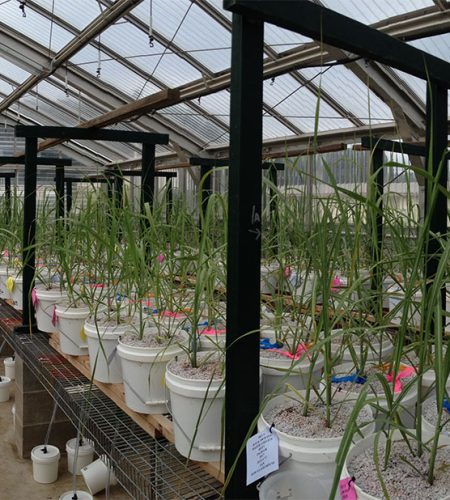
This project (3.2.001) investigated carrier materials that could deliver imidacloprid in a controlled manner for sugarcane farming systems. The work had three main phases: a literature review and workshop, preparing and analysing the carrier materials, and loading and release testing.