
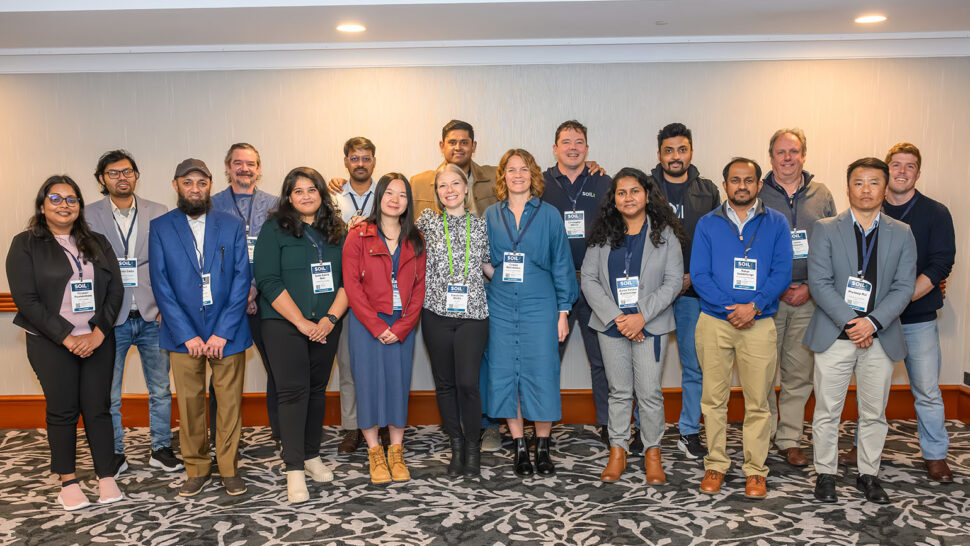
The Soil CRC PhD Program underpins our four research programs to build capability in the future of Australia’s soil research. Our annual Participants Conference provides an opportunity for our students to come together to learn from each other, contribute to research discussions, interact with grower group participants and share their research achievements.
At this year’s conference, 21 students attended a hands-on PhD student workshop led by PhD Program Manager, Dr Cassandra Wardle. The workshop featured small-group activities and discussions on a range of topics from professional identities/branding, through to creating pathways from research to impact
Dr Wardle said the main purpose of the workshop was to help students prepare for life beyond their PhD, and beyond the CRC — thinking about their next steps, the potential impact of their work, and how to maintain and build upon the valuable connections they have created with each other and with the broader Soil CRC community.
“This final workshop was about cementing connections and encouraging students to tap into each other’s networks, so they can continue supporting one another and creating impact well into the future,” she said.
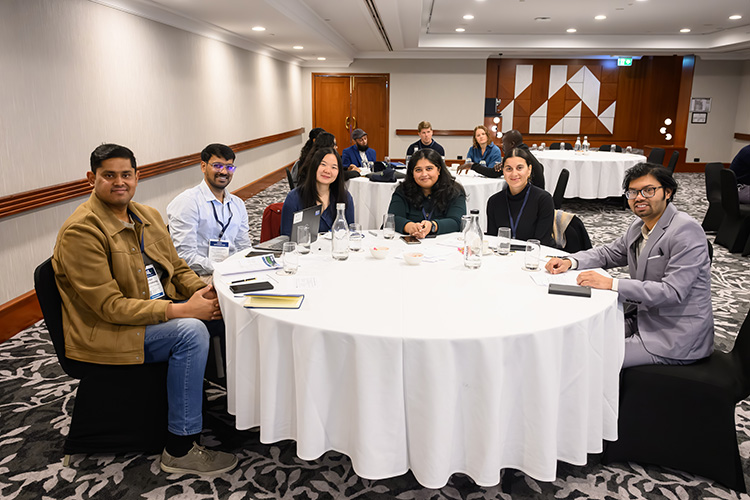


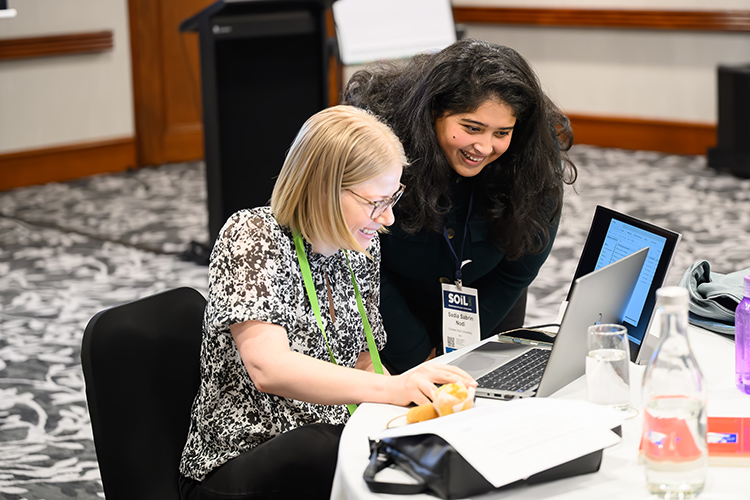
Following the workshop, the students joined the four program workshops led by the Soil CRC’s Program Leaders. Students had the opportunity to provide input into key elements of our research programs, while also interacting with fellow researchers, staff, and grower group participants.
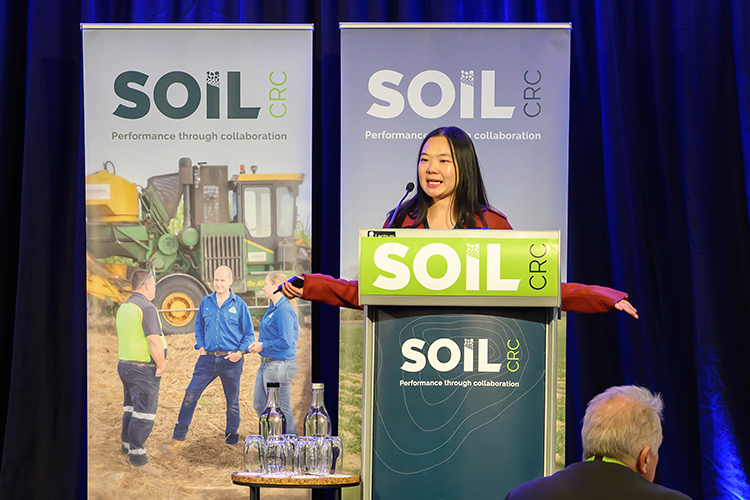
On day 2 of the conference, 12 students nearing the end of their candidature delivered a 5-minute presentation to summarise their research:
- Chenting Jiang, University of Tasmania
- Sadia Sabrin Nodi, Charles Sturt University
- Maria Pfeifle, Murdoch University
- Stephen Lang, University of Adelaide
- Vijay Aralappanavar, University of South Australia
- James Sargeant, Federation University
- Pradeep Rai, Charles Sturt University
- Christopher Wilmot, Charles Sturt University
- Mohd Arish Usman, University of Newcastle
- Tania Monir, Murdoch University
- Bhavya Mod, University of Newcastle
- Vibin Perumalsamy, University of Newcastle.
The student presentations were of a very high quality and again showcased a critical strength of our Soil CRC PhD cohort – the ability to synthesise complex, technical research and to clearly explain how it will benefit the end-users.


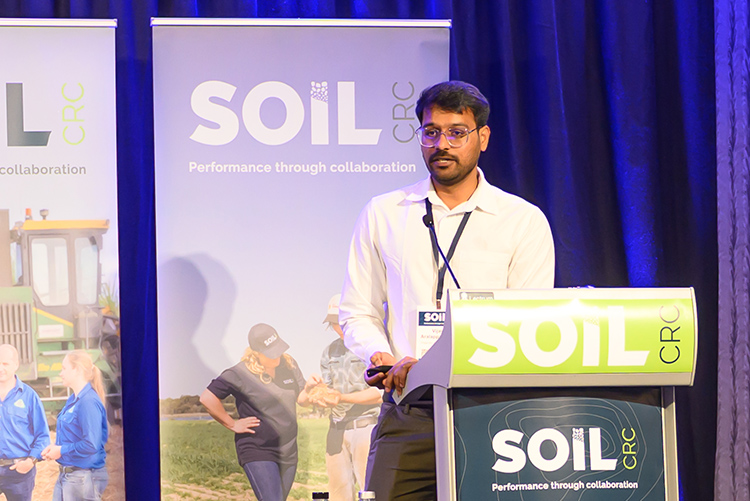


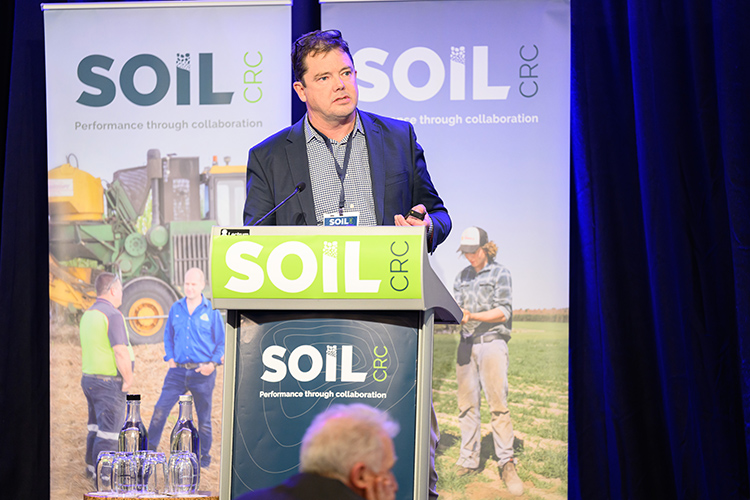

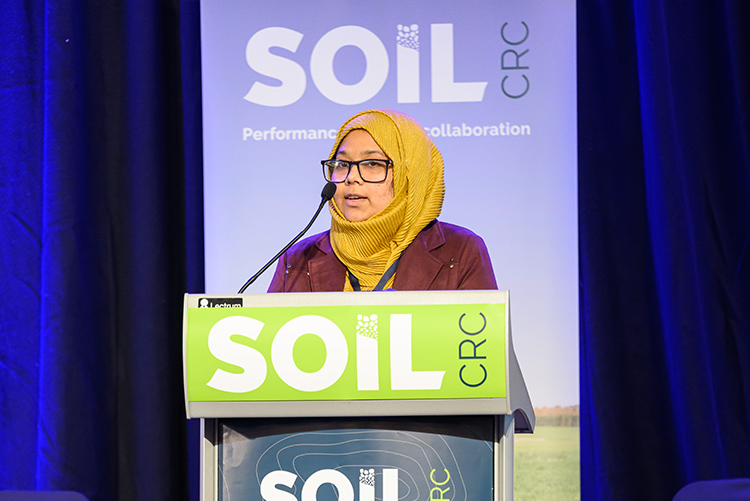


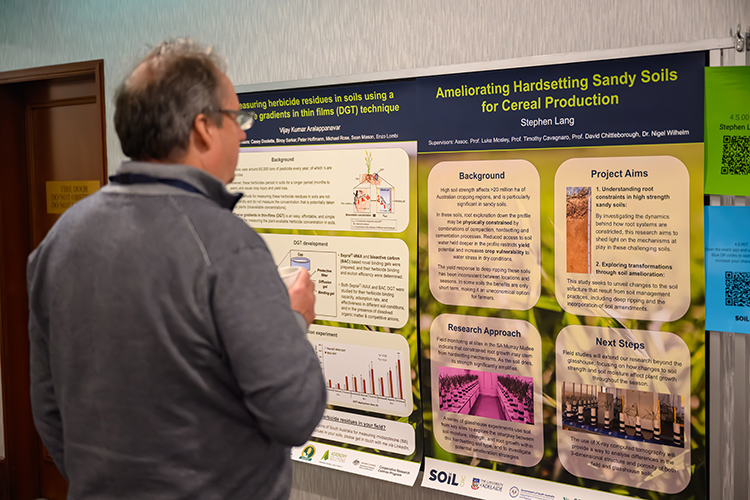
The presentations were complemented by a large display showcasing 16 PhD research posters, which attracted significant interest from delegates. Soil CRC staff received positive feedback about the quality of the posters and how well they communicated the research needs, aims and expected benefits.




Students were keen participants in the Soil CRC’s 2 field trips on the final day of the conference. They headed to Kweda, Bullaring and Wathingarra in the WA wheatbelt to visit our long-term field experiments, inspect the local soil, and engage with our researchers, grower group representatives and host farmers in the field.


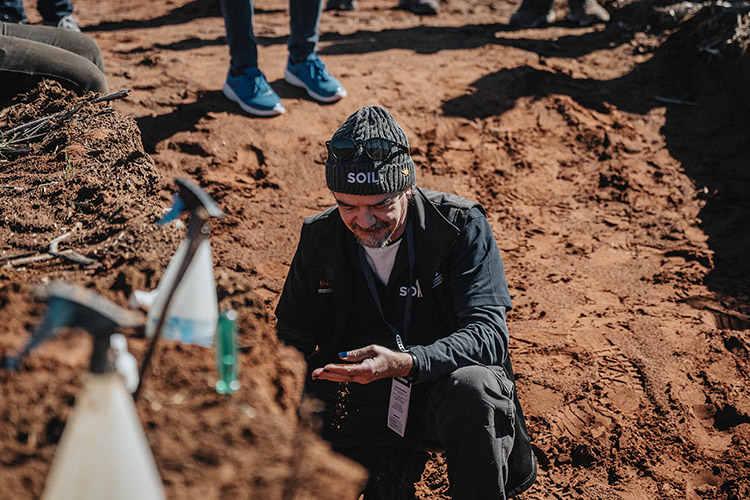

Dr Wardle said she is incredibly proud of our PhD student cohort and how they have developed and excelled during their time with the Soil CRC.
“Our PhD students come from a diverse range of backgrounds, with different levels of experience and life-skills. I have witnessed them openly share their knowledge with each other and help each other grow as individuals to the benefit of the entire cohort,” she said.
“I am in awe of what they have achieved so far and of the contribution they are all making to agriculture research in Australia. I’m also really excited to see where their PhDs will take them in future.”
The Soil CRC’s legacy will be strengthened by the success of our PhD student program. We currently have 16 completions, 7 students with their thesis under examination, and another 26 students at various stages of progress. We are well on track to achieve our target of 40 completions by June 2027.
The impact of the PhD Program was further demonstrated by Soil CRC PhD student and PhD Program Committee member, Phil Kay, who delivered a ‘thank you’ speech at the conclusion of the conference. Phil expressed the PhD cohort’s gratitude for the opportunities and support they receive through their PhD scholarships.
“…we acknowledge everyone here for your assistance. Whether your university has provided laboratory space, equipment and other resources, this has all helped the members of our cohort to succeed,” he said.
“Likewise, if your grower group or company has provided access to farming land for our trials, provided advice on our research, helped with data collection or assisted in disseminating our research surveys, we greatly appreciate your assistance in our success.”