
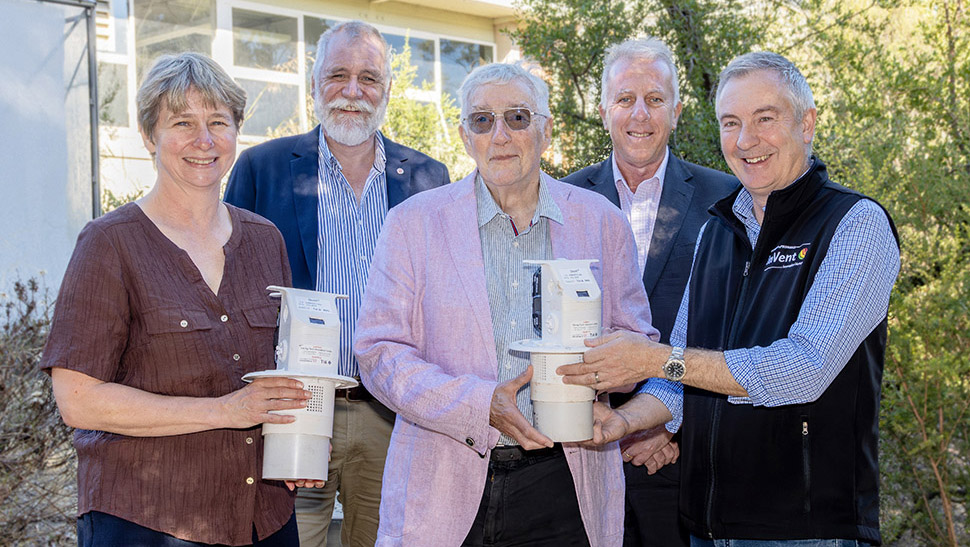
The QUOLL® electronic nose (e-nose) is one step closer to becoming a practical on-farm tool as the Soil CRC entrusts its future development and commercialisation to the Tasmanian Institute of Agriculture (TIA) at the University of Tasmania (UTAS). The intellectual property, which was developed with the Soil CRC’s support, has been assigned to UTAS.
The QUOLL® e-nose is an emerging soil sensing technology that will enable farmers and researchers to sense biological activity directly. Instead of sending samples to a laboratory, they can place the device in the soil for a couple of days and get timely feedback on what the soil is doing before and after a management change.
Leader of the Agricultural Systems Centre at TIA, Professor Caroline Mohammed, said they have developed a business plan which will guide the continued development and future commercialisation of the device to support faster, cheaper and more accessible assessment of soil biological activity.
“Engineering and research support has been provided by the TIA AgTech Innovation Studio team, while UTAS InVent, the University’s research commercialisation arm, is working with the research team to progress pathways for translation and industry engagement,” Professor Mohammed said.
“Ultimately, we want to put the user-friendly device in the hands of farmers so that they can use it to monitor different areas on their farms and better understand how management practices and inputs influence soil function.”
Research into the QUOLL® e-nose device has been supported by the Soil CRC since 2018, through projects ‘Smelling soil’ (2.1.004) and ‘Smelling soil: e-Nose development’ (2.1.005). The research team, led by TIA’s Dr Shane Powell, has made significant progress with the design and testing of the device.
“We have come a long way since the initial idea of developing an electronic ‘soil sniffer’ was proposed to the Soil CRC,” Dr Powell said.
“We co-developed the first prototype with our Soil CRC grower group partners and tested it on a single farm to show proof of concept – the QUOLL® e-nose grew from there.”
TIA will now manage the search for commercial partners to bring the QUOLL® e-nose to market.
“The device is now at Technology Readiness Level 5, which means we have already validated the prototype in a relevant environment. Further engineering, calibration and broader field validation are underway, and we are looking for partners to join us on this next phase of commercialisation,” said Dr Powell.
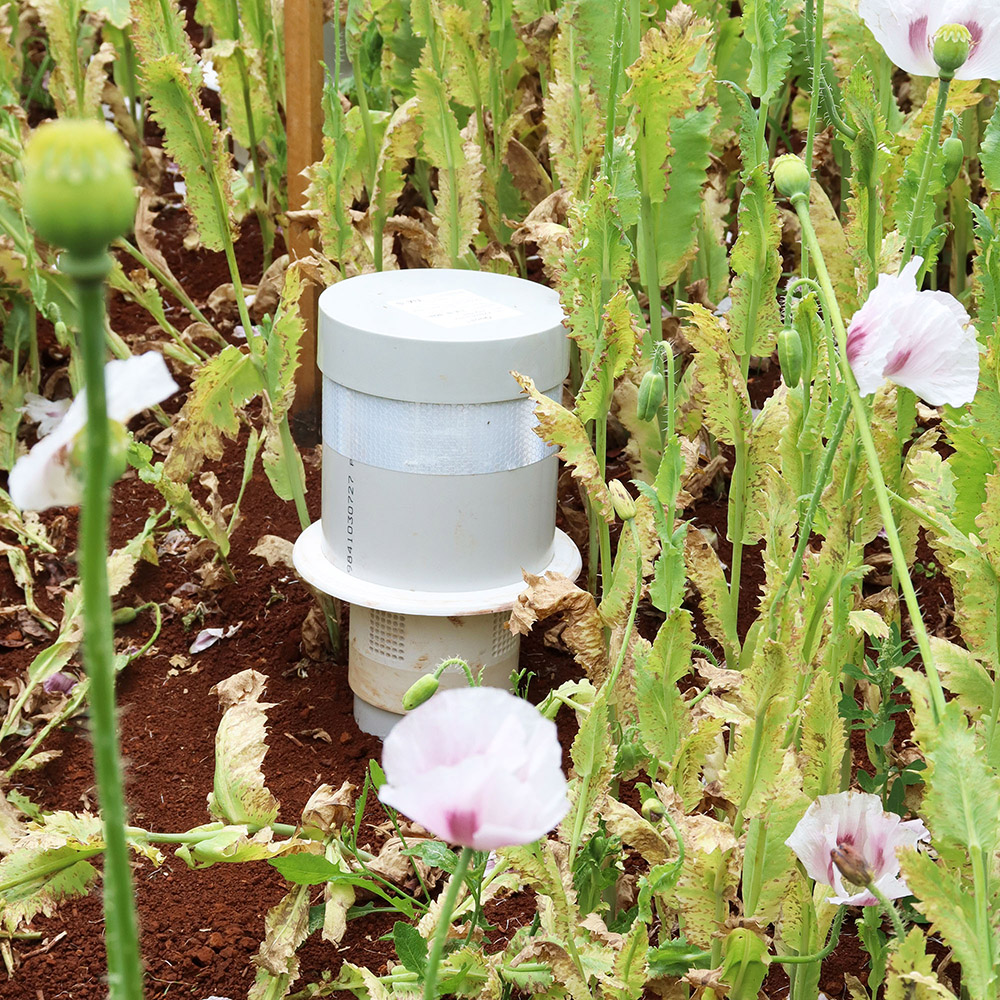
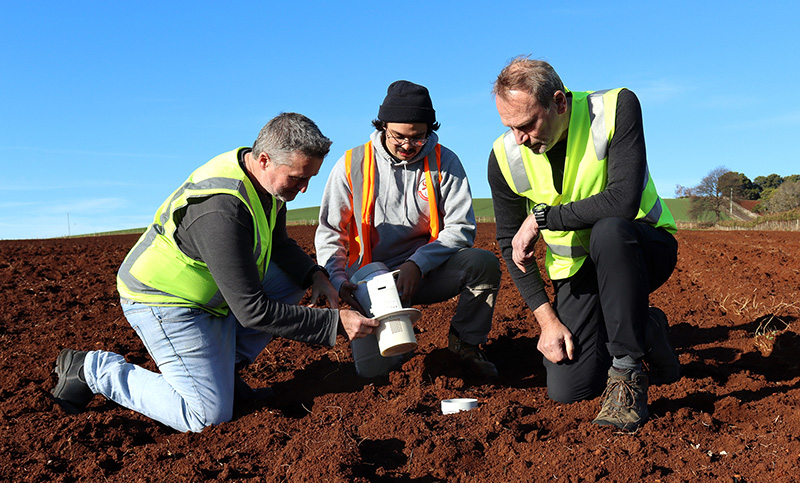
Brett Harris, CEO of UTAS’s research commercialisation arm, Innovation Ventures (InVent), said the opportunity represents an important step in translating university research into real-world impact.
“The QUOLL® e-nose is a strong example of how collaborative research programs like the Soil CRC can generate technologies with genuine commercial potential. Through InVent, we are supporting the TIA team to progress the intellectual property and connect with partners who can take the technology through to production and market deployment,” he said.
Dr Powell said there is already strong market interest from companies producing inoculants and other soil amendments wanting to demonstrate product impact, as well as from researchers seeking new biological data streams.
“Farmers, particularly in regenerative systems, are also keen to understand how their management practices are influencing soil biology over time.”
Tayla Field, Regional Development Officer for VegNET Tasmania, was involved in the Soil CRC project and said the technology has been designed with an end goal for the device to be used by farmers in the field to get results themselves.
“It’s still an emerging area for a lot of growers but I feel as the technology develops it will inform our understanding of soil biology and that will help on-farm management,” she said.
The TIA team are also investigating the potential to use the QUOLL® e-nose to monitor carbon cycling in the soil, with funding from the Tasmanian Government’s Agricultural Development Fund.
Soil CRC CEO Dr Michael Crawford said the future of the QUOLL® e-nose is in very capable hands.
“With the help of the TIA team and a strong commercial partner, we anticipate that the device will soon make the leap from a research setting into working farms,” he said.
Get in touch
Companies interested in partnering with TIA to commercialise the QUOLL® e-nose technology are encouraged to contact TIA’s Dr Shane Powell shane.powell@utas.edu.au or Simon Edwards simon.edwards@utas.edu.au.
Find out more
Main image: Pictured left to right: TIA’s Dr Shane Powell, TIA Director Professor Mike Rose, Soil CRC Chair Dr Paul Greenfield, Soil CRC CEO Dr Michael Crawford and InVENT CEO Brett Harris with the QUOLL® e-nose (source: Tasmanian Institute of Agriculture).