
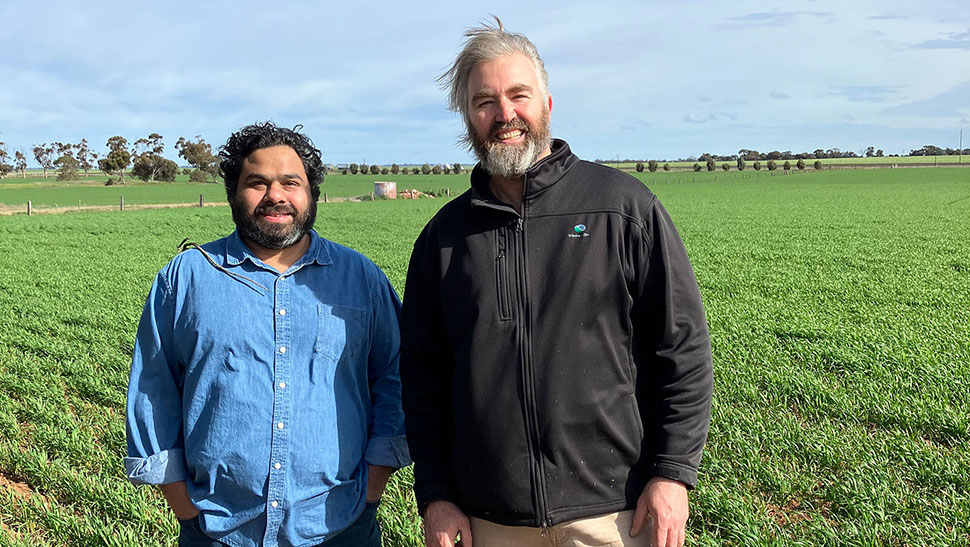
When software engineer Dr Mohammad Arifur (Arif) Rahman completed his Soil CRC PhD in late 2025, he knew exactly what he would be doing next. He was already working as an analyst programmer with the Wimmera Catchment Management Authority (CMA) – a Soil CRC participant and the co-sponsor of his PhD research – and was offered an ongoing role before he was even conferred.
CEO of Wimmera CMA, Dave Brennan, was one of Arif’s four PhD supervisors and said Arif’s research has enabled him to establish personal and professional relationships both within the CMA and with local key leaders in agriculture.
Dave believes this helped to create a seamless transition to full-time employment within the organisation, where Arif’s expertise has proven to be an asset to the team.
“Arif’s commitment, dedication and passion for applying technological solutions to real-world challenges has allowed him to apply his knowledge and skills to boarder natural resource management,” Dave said.
Arif emphasised that his PhD helped him to further develop the specific skills he needed for the role and exposed him to an industry he had little prior experience with.
“I worked as a software engineer for 14 years before embarking on a PhD, so the fields of soil science and agriculture were relatively new to me,” he said.
The opportunity to enhance his machine learning skills and explore their applicability to a demanding real-world problem was what initially motivated Arif to get involved in this type of research.
“My PhD exposed me to the agriculture industry and catchment management, as well as farmer engagement – it enabled me to build my stakeholder engagement and extension skills.
“I also broadened my knowledge and skill set in soil science and remote sensing, through collaboration with my fellow Soil CRC PhD students and Australian and international researchers.”
Through his PhD, Arif developed a machine learning model to estimate soil organic carbon content that is cost-effective, rapid and non-invasive.
“I developed a learning-based algorithm that enables a computer to identify important image components captured by hyperspectral cameras to accurately estimate soil organic carbon, and therefore assist in determining soil health,” he said.
“This technology will enable farmers to better understand the carbon sequestration potential of their land and may encourage greater participation in the carbon emissions abatement programs.”
Arif’s thesis examiners highlighted the overall significance of his work and called out its potential impact in agriculture and research.
One examiner noted that his thesis “demonstrates a profound understanding of the field, a powerful capacity for solving complex problems, and exceptional skill in presenting a series of innovations in a systematic and compelling manner.”
Impressively, another stated: “The thesis successfully identifies a critical and underexplored gap in the current research – the need for a hyperspectral dimensionality reduction method that simultaneously addresses ‘scalability’, ‘stability’ and ‘spectral continuity’. This is not an incremental improvement but a systematic solution.”
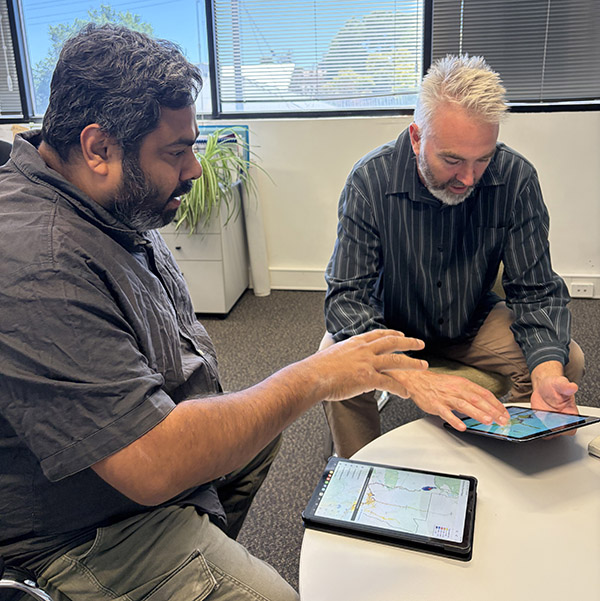
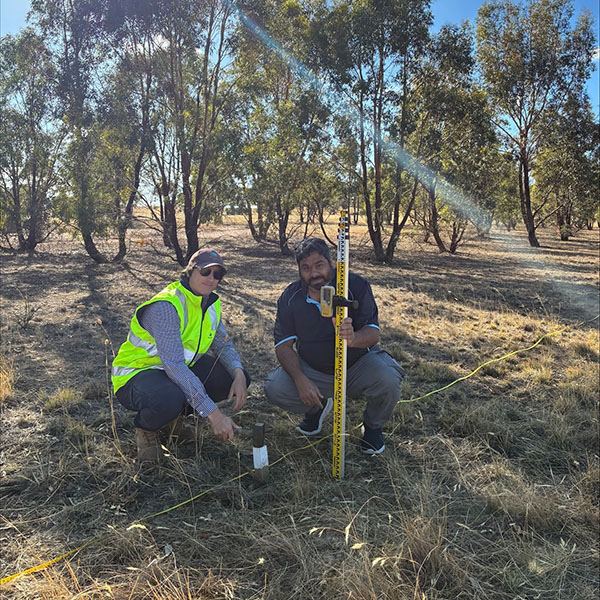
Back at Wimmera CMA, some of Arif’s major projects include developing an application to analyse vegetation health over time, experimenting with low-cost alternatives to expensive soil moisture probes for large-scale regional deployment, and classifying native and commercial vegetation.
“I’m excited to be working on the ground with my Wimmera CMA colleagues and our farmers to develop innovations that benefit our region,” he said.
“My sincere thanks to Wimmera CMA, the Soil CRC, Federation University and my supervisors – their support throughout my candidature helped guide me to where I am now, and for that I am grateful.”
Federation University’s Professor Shyh Wei Teng, who supervised Arif’s PhD, said it is an excellent example of the success of cooperative education.
“Not only was the project co-designed and co-developed with our industry partners, but Arif was also mainly based at the Wimmera CMA to work closely with colleagues there,” he said.
“At the CMA, Arif had regular opportunities to interact with the farmers and other stakeholders, thereby enabling him to gain greater insights of their pain points to further improve the outcomes of the research conducted by him in his PhD project.
“I am also very proud that through this process, Arif is fully job-ready and is now working at Wimmera CMA and contributing to regional Victoria.”
Arif’s PhD completion is part of the Soil CRC’s greater contribution to building Australia’s soil research capability of the future. We wish Arif the utmost success in his role and congratulate Dave and the Wimmera CMA for securing an exceptional Soil CRC PhD graduate.
Find out more
Main image: Arif Rahman (left) with Wimmera CMA CEO Dave Brennan (source: Wimmera CMA).