
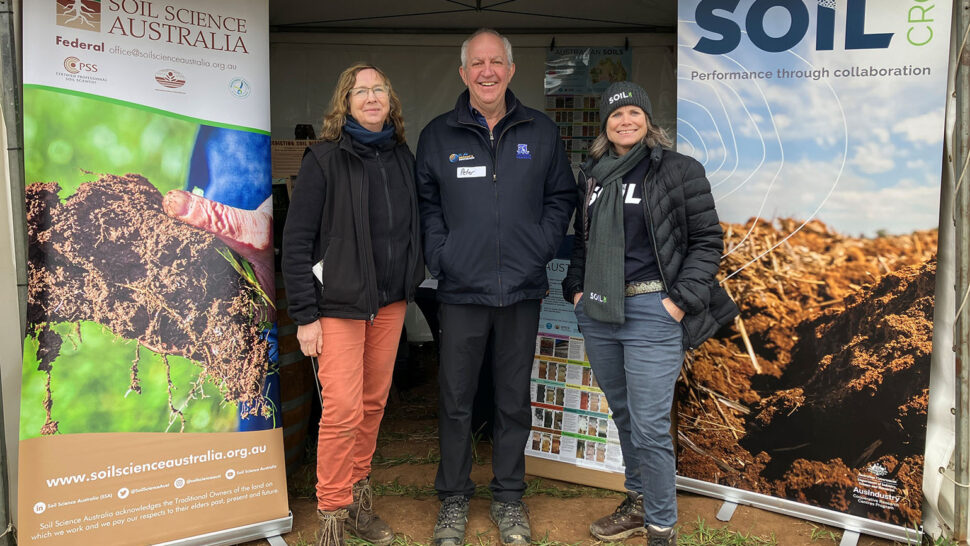
By Felicity Harrop, Soil CRC Soil Knowledge Broker
It is a busy time on field day calendar, and it has been a valuable opportunity for the Soil CRC to connect with farmers and advisors across our participant farming systems groups. The Soil CRC was represented at several events to share the latest soil management knowledge, showcase our resources and highlight projects underway in different regions.
Riverine Plains Alternative N Sources Field Day – Sanger, NSW
The Riverine Plains group hosted a field day exploring how companion cropping and intercropping can influence nitrogen use and plant performance. Soil CRC researcher Dr Abe Gibson (Southern Cross University) shared outcomes from the Stinking Goat project, ‘Plant-based solutions to improve soil performance’, where temporarily cropping vetch with wheat potentially led to greater wheat root density in deeper soil layers, an additional 20 kg soil mineral nitrogen/ha and 30 mm plant available water to 90 cm depth at anthesis.
Birchip Cropping Group Main Field Day – Birchip, Vic
At the Birchip Cropping Group Field Day, soil science was front and centre. The opportunities for farmers and advisors to access the latest soil management information through the Soil CRC Knowledge Hub, Soil Science Australia’s Smart Soils for Farming Resource Library, and the Victoria Drought Resilience Adoption & Innovation Hub was highlighted and shared.
Victorian Regional Soil Coordinator, Dr Peter Fisher, who is based at the Victoria Drought Resilience Adoption & Innovation Hub, was also on hand to promote the importance of good soil management for improved crop productivity and sustainability.
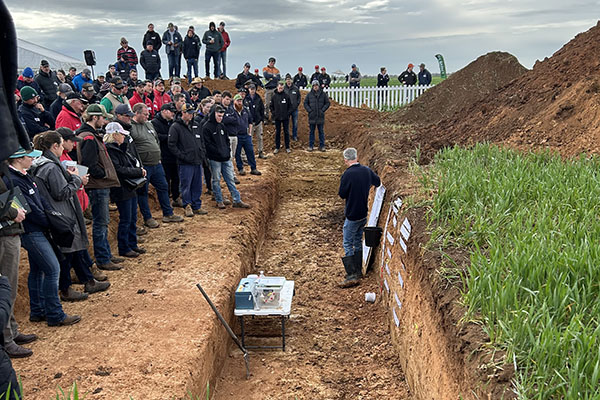
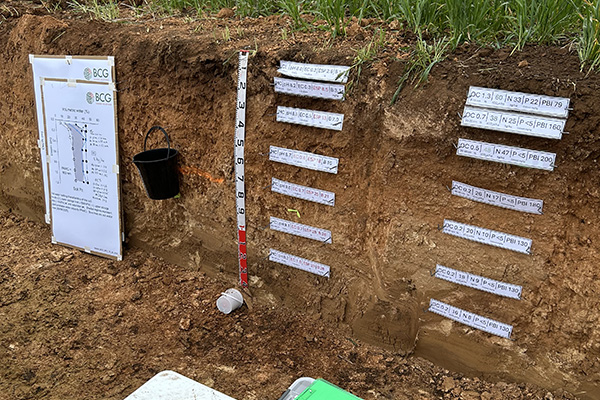
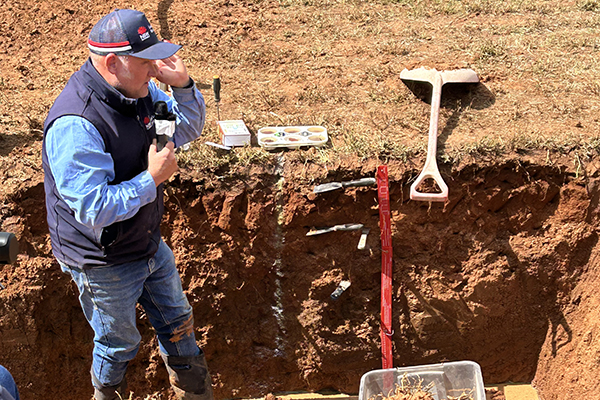
The day began with an excellent overview from Dr James Nuttall (BCG) in the soil pit, who explained the soil constraints at the site, including increasing salinity, boron, alkalinity, and sodicity (slaking and dispersion) at depth.
These factors limit the effective ‘bucket size’ available for plant roots to access water and nutrients. Possible amelioration strategies were discussed, including gypsum application and managing nutrient inputs to align with realistic yield potential.
Central West Farming Systems Spring Field Day – Condobolin, NSW
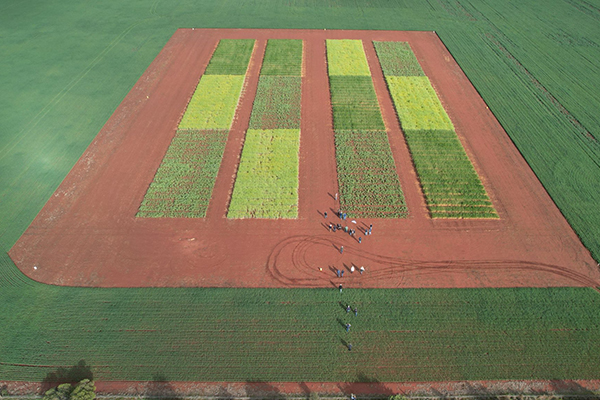
Central West Farming Systems showcased the Soil CRC project ‘Building soil resilience and carbon through plant diversity’, which builds on earlier work exploring ‘Plant-based solutions to improve soil performance’.
Professor Terry Rose (Southern Cross University) shared insights on the multiple soil constraints at the site. These include topsoil acidity, that may be limiting nitrogen fixation in the faba bean crop, and dense subsoils restricting productivity. He also discussed the use of intercropping to boost productivity and deliver environmental benefits.
“Temporary intercropping is an opportunity to build plant diversity in broadacre cropping systems. We have not seen severe agronomic penalties from including a sprayed-out legume in our trials, but also not consistent soil health responses,” Dr Rose said.
“More work is required to fully explore potential yield impacts and to identify how a wheat–legume option would fit into rotations that include a legume cash crop.”
FarmLink Open Day – Temora, NSW
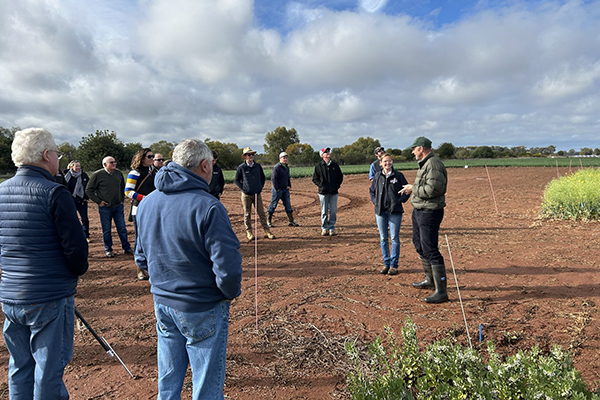
At the FarmLink Open Day in Temora, I provided an update on Soil CRC projects relevant to the region. The project ‘Integrated solutions for accessing soil moisture’ generated strong interest, with many landholders keen to explore ways of managing multiple constraints common in brown sodosols. I also demonstrated the ‘Visualising Australasia’s Soils (VAS) soil data portal’, showing how farmers can identify local soil types and constraints using this powerful tool.
The soil pit generated many questions, revealing several constraints including soil acidity and dispersion, considered to limit rooting depth and legume nitrogen fixation. Interestingly, the lucerne growing in the paddock showed good tolerance, with nodulation evident and roots penetrating to one metre.

Southern Farming Systems field days - Inverleigh & Streatham, Vic
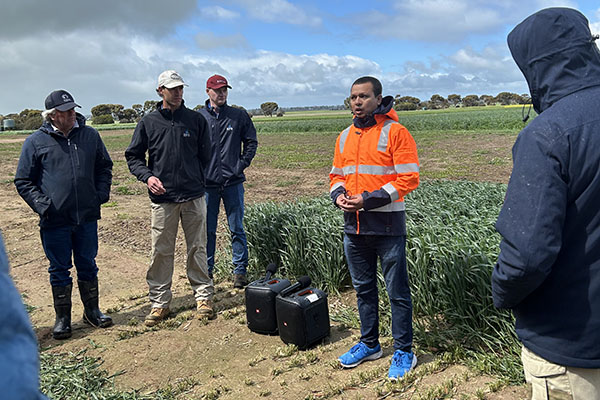
This year Southern Farming Systems (SFS) have been hosting the first year of field trials for the ‘Evaluating the agronomic benefits of biosolids biochar’ project with the University of Newcastle and South East Water. University of Newcastle Research Associate Dr Santosh Paul shared the objectives and management of the glasshouse and field trials with farmers and advisors attending the SFS Spring Crop Walk in Inverleigh. Trials are assessing the impact of the biochar product, produced from biosolid waste, on plant growth, soil ecosystems and the benefits on land application, including the safety of the product. Field monitoring was completed after the field day, ably assisted by SFS field staff.
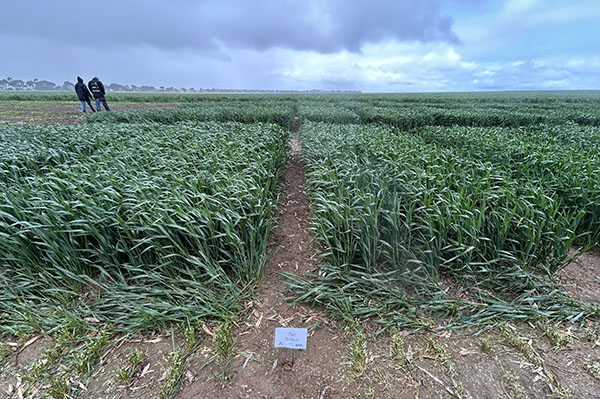
The SFS AgriFocus Field Day at the Streatham trial site provided the opportunity for our Program 2 Leader, Dr Nathan Robinson, to tag team with Federation University colleague Dr Richard MacEwan in the soil pit. Richard had the audience in the palm of his hand as he described the challenging soil of the southwestern Victoria site, with a fertile topsoil horizon over a tough 40 cm horizon of iron stone/magnesium gravel sitting on a tight sodic dispersive clay. A bleached layer illustrated historical water logging reducing crop yields in wet years, but in this Decile 2 rainfall year the barley roots were found at 1.2 m seeking water.
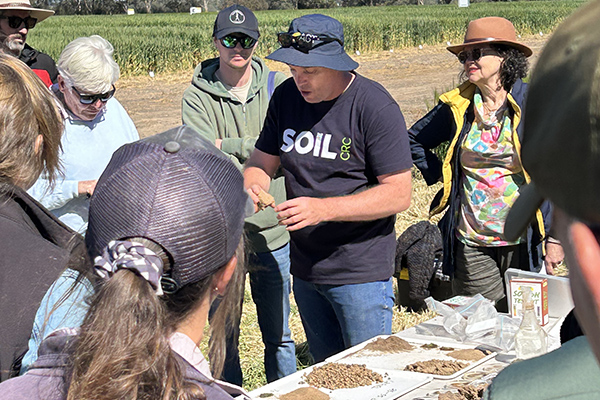
Nathan set up a slaking and dispersion test to illustrate where the limitations were down the soil profile, showing farmers how they can do the test themselves with their soil. Understanding the limitations of the sub soil is critical for managing the future productivity and profitability of any soil.

Symposium for the Use of Organic Soil Amendments (SUOSA) – Gold Coast, Qld
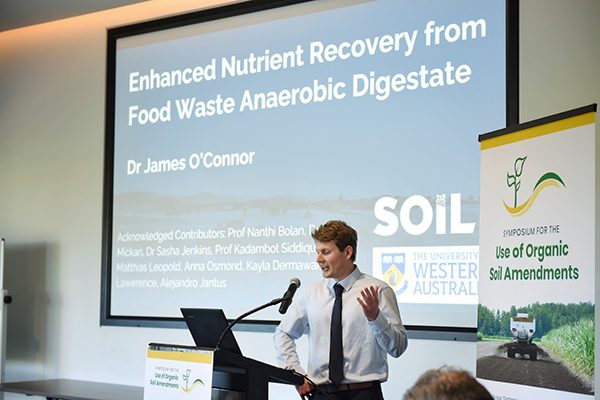
Not a field day exactly, but another opportunity to speak about the research of the Soil CRC, this time at an international conference in Australia on the use of organic soil amendments (composts, biochar, mulches, biosolids, etc.) in agriculture. Soil CRC CEO, Dr Michael Crawford, delivered the opening keynote address, and researchers Professor Terry Rose (Southern Cross University) and Associate Professor Richard Culas (Charles Sturt University) spoke about their Soil CRC research, as did former Soil CRC PhD student, Dr James O’Connor (University of Western Australia). The symposium was attended by lots of industry stakeholders, including those who are members of Soil CRC participant organisation, Australian Organics Recycling Association (AORA).


Looking ahead
These field days were an excellent opportunity to share Soil CRC knowledge, engage directly with farmers, and strengthen our collaborations with participants. The positive feedback and strong grower engagement highlight the value of bringing research into the paddock.
I look forward to continuing engagement through the implementation of the Soil CRC Adoption Plan, ensuring that our research outputs are shared widely and translated into practice across Australia’s farming systems.
Please get in touch if you would like to share the latest Soil CRC knowledge at your local events: felicity.harrop@soilcrc.com.au.
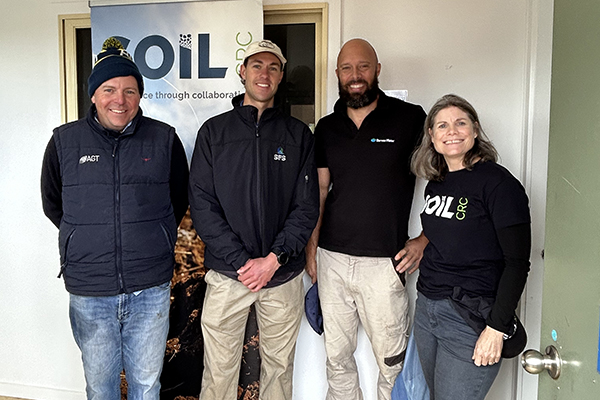
Main image (top), L-R: Dr Marita McGuirk, Soil Science Australia’s National Soil Strategy Extension Team Project Officer; Victorian Regional Soil Coordinator Dr Peter Fisher, based at the Victoria Drought Resilience Adoption & Innovation Hub; and Felicity Harrop, Soil CRC Knowledge Broker.