
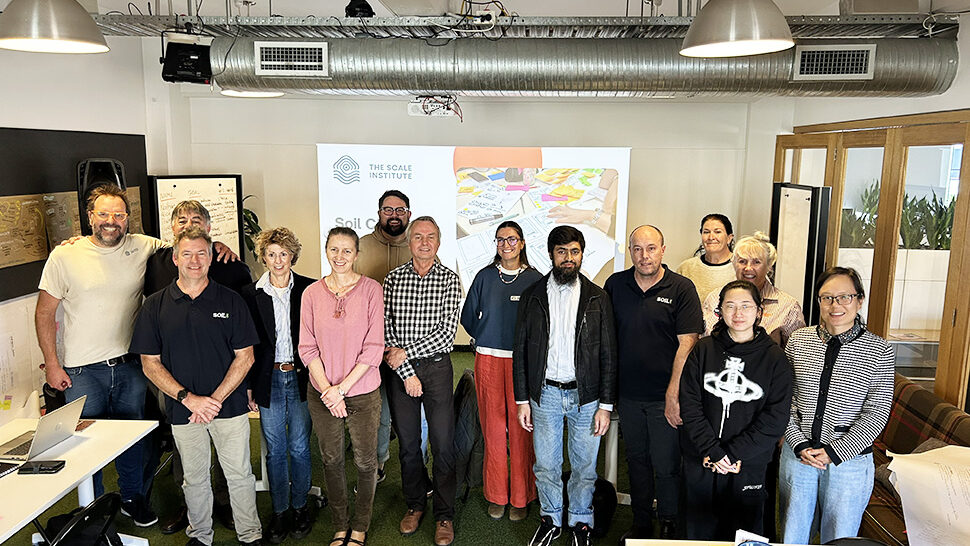
By Felicity Harrop (Soil CRC Adoption Manager) and Bret Ryan (Soil CRC Project Leader)
Researchers, farmer groups and industry partners from across Australia recently came together in Sydney for the Soil CRC Accelerator Innovation Incubator Workshop — a two-day event focused on helping promising CRC research outputs move closer to real-world adoption and impact.
Facilitated by Stephen Rutter from The Scale Institute and coordinated through the Soil CRC Accelerator Program (1.4.007) led by Bret Ryan from Southern Farming Systems, the workshop brought together participants from multiple CRC projects. It built on earlier innovation capacity building led by Professor David Falepau from Charles Sturt University, project leader of two Soil CRC innovation capability projects, which helped shape the process for supporting research outputs with adoption potential.
The workshop focused on helping research teams move beyond technical outputs to consider how their work could be translated into practical value for farmers, advisors and industry. Projects explored questions around farmer need, value proposition, adoption pathways, future investment and commercial potential.
The projects represented at the workshop cover a range of research areas, including soil indicators and diagnostics, soil water storage and access, organic-based nitrogen fertilisers, subsoil constraint amelioration and broader adoption activities.
Participants included representatives from Southern Farming Systems, Central West Farming Systems, Birchip Cropping Group, West Midlands Group, Facey Group, Corrigin Farm Improvement Group, the University of Southern Queensland, Federation University Australia, Charles Sturt University, Griffith University, Murdoch University and UNSW, with Soil CRC Adoption Manager Felicity Harrop attending to support linkages to the Adoption Plan.
Stephen Rutter said the workshop highlighted the value of creating structured space for researchers and industry to work together on translating research into practical outcomes.
“Too often, research translation starts at the end of a project. Through its Accelerator Program, the Soil CRC challenged that by creating an intensive workshop where researchers, farmers and industry could collectively explore which ideas had the strongest potential to move from journal articles into practical innovations and commercial applications that farmers would value and use,” he said.
Over the two days, project teams participated in structured venture development activities, industry challenge sessions and collaborative discussions designed to test assumptions and refine pathways forward. Farmer group representatives played an important role in challenging concepts from an industry and grower perspective, helping teams think through how their ideas could be applied, tested and supported in farming systems.
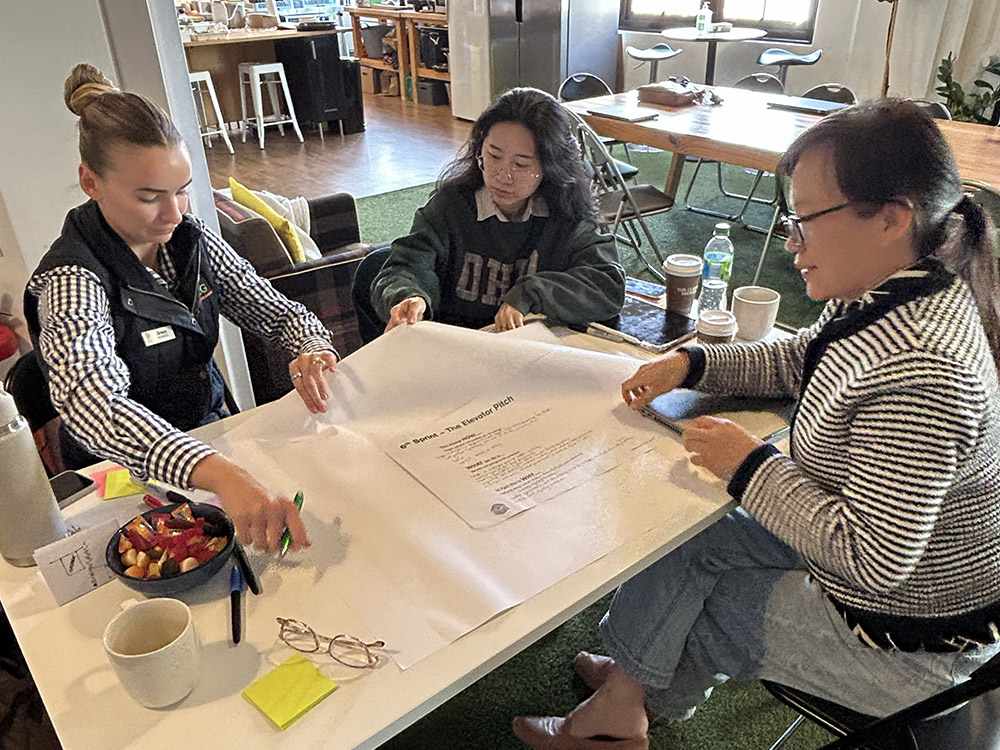
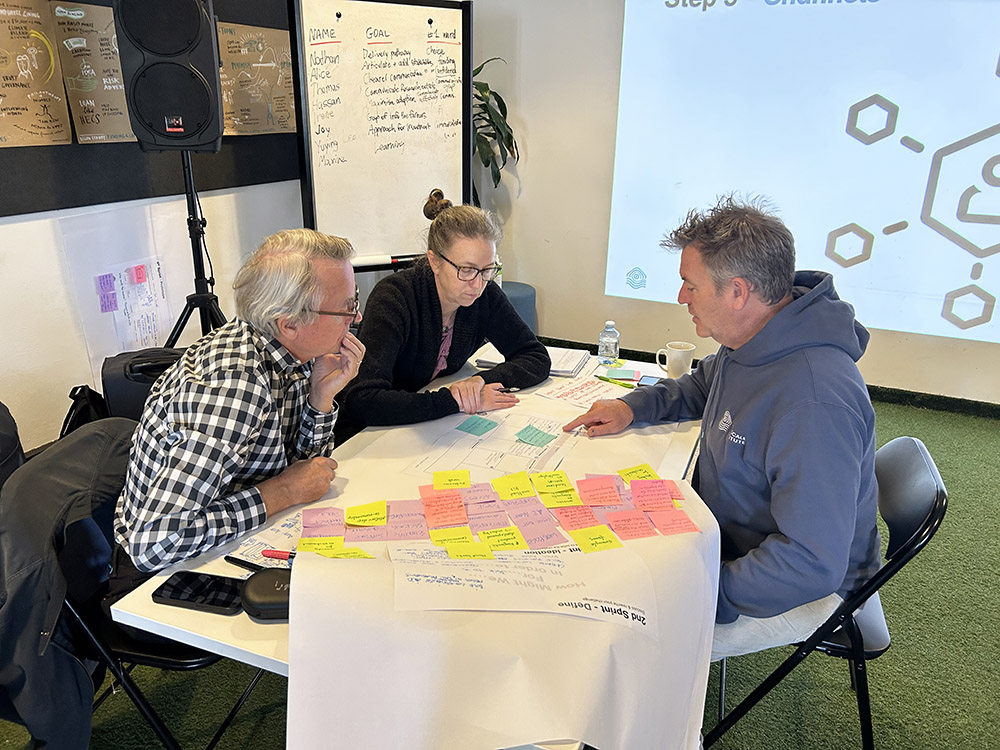
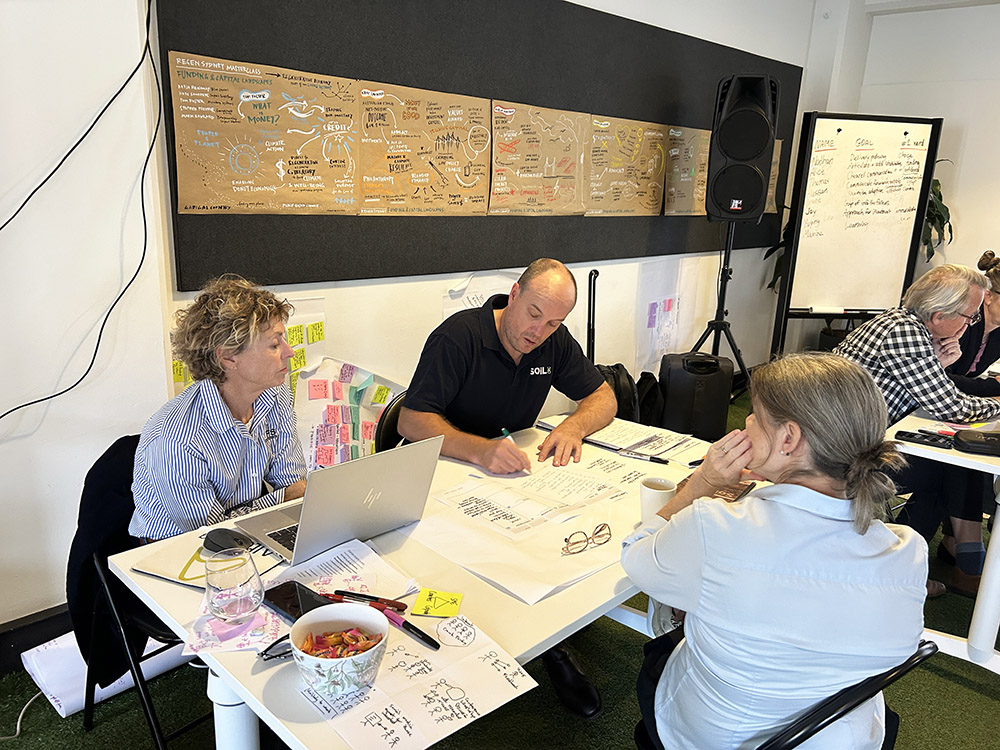
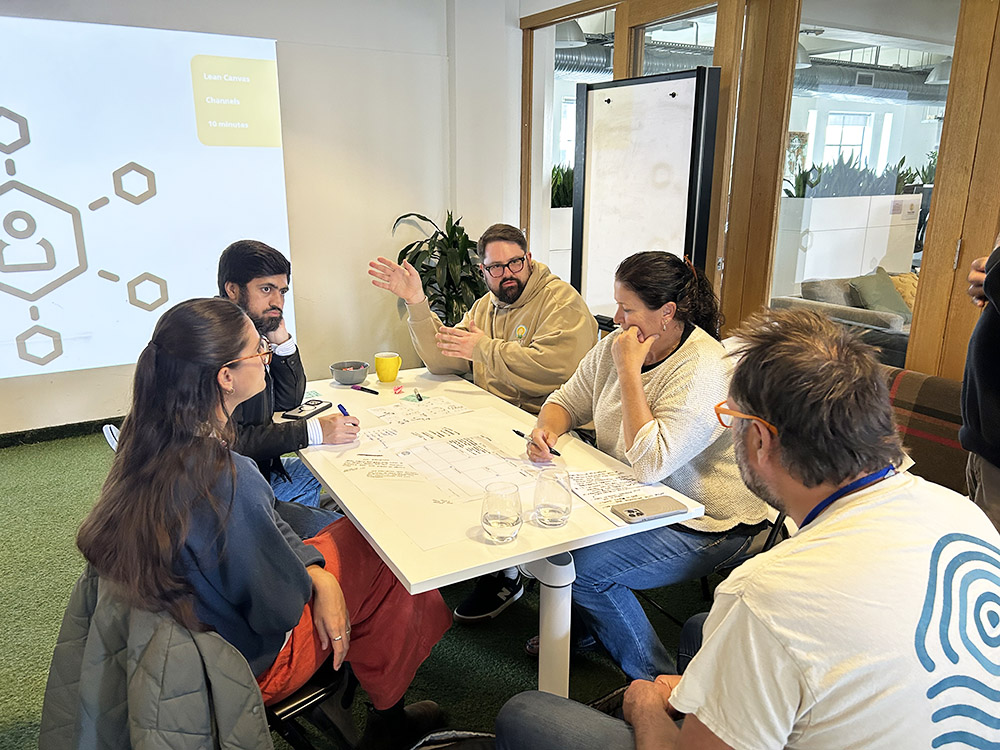
Throughout the 2-day workshop, researchers worked on a range of activities with support from Soil CRC farmer group representatives.
The workshop generated strong engagement from both researchers and industry participants, with many highlighting the value of bringing research and farming systems expertise together in the same room.
Diana Fear, CEO of Central West Farming Systems, described the workshop as a fantastic opportunity to get together, share concepts with the researchers and distil ideas into what can be practically achieved on the ground.
“We want farmers to use the adoption of technology to not only increase production and profitability but be confident in their decision making and sleep better at night.” she said.
Dr Alice Melland from the University of Southern Queensland reflected on the workshop’s focus on impact and translation, noting that it was “a very worthwhile workshop for designing pathways forward for our research to have on-ground impact and further research investment.”
Professor Thomas Baumgartl from Federation University Australia also highlighted the importance of maintaining momentum beyond the workshop.
“I hope we can keep some of the energy and find or develop further steps to elevate that technology and diagnostic interpretation to support the industry medium to long term,” he said.
The incubator process is continuing beyond the Sydney workshop. Stephen Rutter is leading a series of entrepreneurial coaching sessions with participating project teams through May and June, supporting further customer discovery, business model planning and refinement of project pitches.
The process will culminate in an online showcase in late June, where project teams will present short pitches to farmer groups, Soil CRC representatives and broader stakeholders.
The initiative forms part of the Soil CRC’s broader commitment to accelerating adoption and impact from CRC research investments and demonstrates growing interest across the CRC in strengthening pathways from research to practical industry outcomes.