Farmers and scientists increasingly recognise that soil biology underpins both productive farming systems and healthy ecosystems. Many landholders are keen to measure soil biology to understand how their management affects the soil, and to guide decisions such as reducing chemical inputs or building soil carbon. Yet choosing what to measure is not straightforward.
A wide range of soil tests can assess the diversity, abundance and function of soil microbes, but most are difficult to interpret or apply. Some are too broad to guide action, others too narrow to be widely useful, and many vary over time in ways that make them unreliable for on-farm monitoring.
The Soil CRC’s ‘Measuring soil microbes’ project (2.1.008) set out to evaluate how different management practices influence soil biology and how those measures relate to soil function and crop health. The goal was to identify tests that are both practical and cost-effective, and that could eventually form part of routine soil health monitoring on farms.
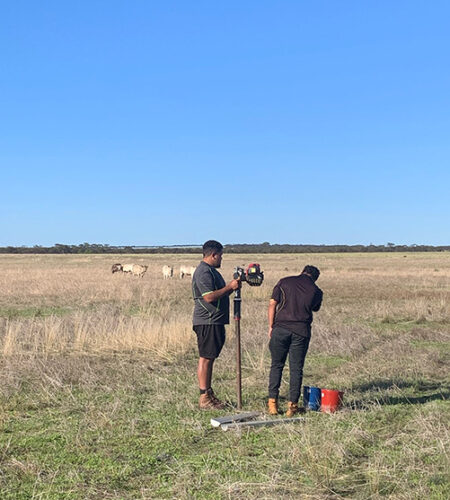
Large-scale sampling across regions and seasons
The study ran across 5 sites in Australia, managed in collaboration with Wheatbelt NRM (WA), Central West Farming Systems (NSW), Birchip Cropping Group (Vic), the South Australian Research and Development Institute, and the Northern Grower Alliance (NSW).
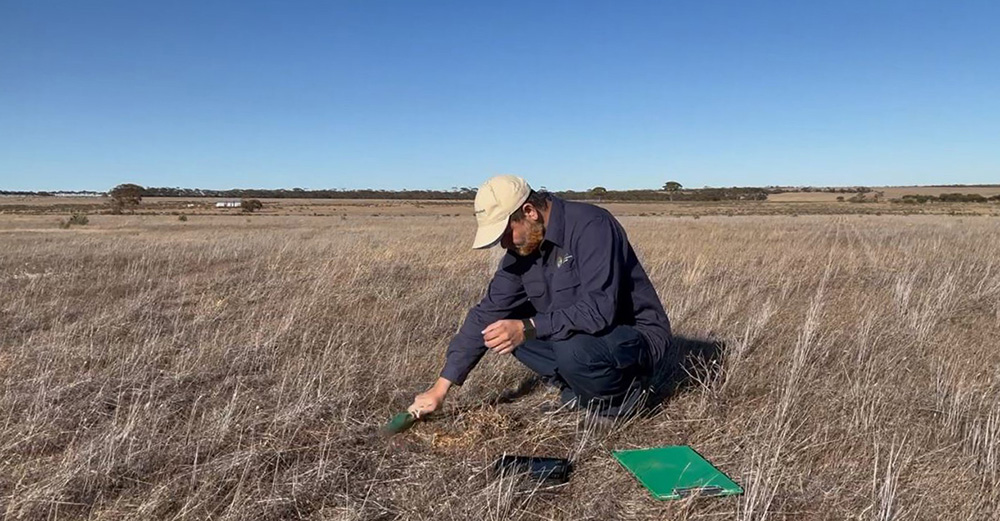
Over the 2022 and 2023 growing seasons, more than 400 soil samples were collected at 6 stages from pre-sowing through to post-harvest. Researchers measured 89 different soil properties, from pH and carbon fractions to microbial biomass, nematode populations and soil respiration.
“No single measure captures the complexity of soil biology. By testing a suite of soil properties across sites and seasons, we can start to see which ones are sensitive to management changes and which are more stable over time,” said Dr Mick Rose, Soil CRC Project Leader and Associate Professor at Southern Cross University.
Most of the tests used have well-established methods. This project validated and refined several specialised microbial tests, including:
- phospholipid fatty acid (PLFA) analysis to measure fungi and bacteria and track changes in their balance under different conditions
- soil enzyme assays to show how actively microbes cycle carbon, nitrogen, phosphorus and sulphur
- quantitative PCR (qPCR), a DNA-based method used in research to count total fungi and bacteria with high precision.
Promising soil biology tests
Among the wide range of measures assessed, several showed promise for future soil health monitoring. Soil protein emerged as a strong candidate. It is relatively low-cost and closely reflects soil biological activity. International research has also shown clear links between soil protein and critical functions such as nutrient supply and soil structure, reinforcing its potential for routine use in soil testing.
Labile carbon, the fraction of carbon most readily available to microbes, was also strongly associated with healthier and more diverse microbial communities. Building this form of carbon supports greater microbial activity and diversity, which in turn contributes to soils that are more resilient and biologically active.
Nematodes provided a useful signal of broader system differences, distinguishing between regenerative and conventional farming practices. They were also responsive to pesticide use, particularly fungicides, highlighting their sensitivity to management changes. DNA-based tests proved the most sensitive overall, detecting changes from practices such as liming, crop rotation and pesticide use. However, while powerful, these methods are expensive and are not yet practical for routine use on farms.
Next steps
The next phase of the project will focus on making soil biology tests more accessible and useful for landholders. Practical guidance will be developed to help farmers interpret results and understand how their management practices are shaping soil biology.
“We want to move soil biology testing out of the research space and into everyday use. That means giving farmers clear guidance on how to interpret results,” said Dr Rose.
The project will also work to integrate microbial indicators into national and industry programs, allowing initiatives such as the National Soil Monitoring Program and Grains and Research Development Corporation (GRDC) projects on soil health frameworks and regenerative agriculture to benchmark and compare results more effectively. A further priority is to encourage commercial laboratories to adopt the most promising indicators, with particular emphasis on measuring free-living nematodes and soil protein.