
Many Western Australian farms have sandy soils with low organic carbon, characterised by low water-holding capacity, poor nutrient retention and reduced productivity. These soils also limit opportunities to participate in carbon markets, which depend on measurable carbon gains.
For grain growers across the state, improving productivity, building resilience and accessing new market opportunities can be supported by finding ways to increase soil organic carbon.
To address this challenge, the Soil CRC partnered with the Western Australian No-Tillage Farmers Association (WANTFA), Murdoch University and grower groups including Facey Group, Corrigin Farm Improvement Group, West Midlands Group and Liebe Group. With additional funding from the Western Australian Department of Primary Industries and Regional Development, the project team established four large-scale trial sites (Bullaring, Coorow, Kweda and Wathingarra) across the WA wheatbelt to test new farming methods aimed at boosting soil fertility and sequestering carbon.
Our ‘New farming methods to sequester soil carbon’ project (4.1.006) compared five approaches:
- Traditional crop rotations
- Crop sequencing with mixed species of pasture and crop
- Soil amelioration including deep ripping, clay incorporation, mouldboard ploughing and rotary spading
- Soil amendments including compost, manure, organic pellets, frass, gypsum, clay, zeolite and biochar
- Combinations of the above.
Pathways to improving sandy soils
The sites demonstrated that there is no single solution for building carbon in WA’s sandy soils. Instead, combinations of approaches will be required, adapted to soil type, rainfall and farming system.
At Kweda, combining compost with deep ripping showed promise for reducing subsoil constraints and improving water use efficiency, but compost alone was less effective.
The Bullaring trials compared legumes and legume intercropping alongside mechanical disturbance and clay incorporation. Both strategies improved soil fertility, but in different ways. Growing legumes contributed to soil carbon through plant residues, while the mechanical treatments improved nutrient retention and reduced weed competition for soil moisture.
At Wathingarra, rotary spading and mouldboard ploughing boosted serradella biomass. Biochar and frass applications improved nutrient uptake and showed signs of longer-term fertility benefits. Compost gave a short-term boost, but its impact declined after 3 to 4 years, and higher weed pressure was observed where compost was applied.
At Coorow, where cropping history was limited, clay and organic matter increased water holding capacity and early plant growth, but longer-term monitoring will be needed to confirm the effects.

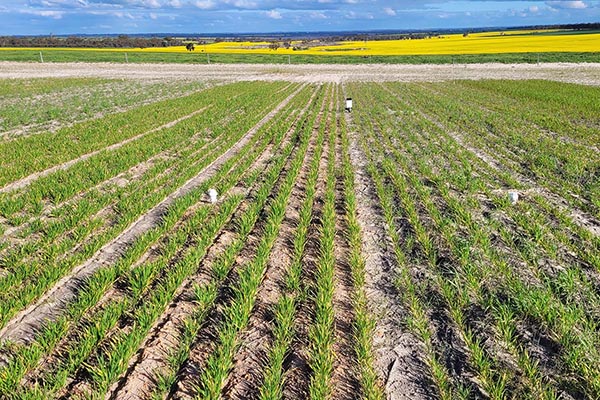


L-R: canola crop at the Kweda trial site; clay amelioration at Bullaring in 2022; the Wathingarra trial site; the Coorow site in 2024.
Patterns across the sites
Overall, the trials showed that improvements in soil fertility were greatest when amendments were combined with physical amelioration. Water-holding capacity and nutrient retention increased, helping crops make better use of rainfall and fertiliser. The yield responses were more modest and often declined by the third year.
“On these low-fertility sands, yield is often the focus, but what stood out was how the soil itself improved. Better water-holding capacity and nutrient retention give us a foundation to build on,” said Dr David Minkey, Soil CRC Project Leader and Executive Director of WANTFA.
Carbon gains were small and variable across the sites, which was expected given the short timeframe of the project. Building soil carbon is a slow process, especially in sandy soils with low clay and organic matter. However, the combination of crop sequencing, soil amelioration and amendments showed the strongest potential for achieving long-term gains.
“This isn’t a quick fix. You don’t see huge jumps in carbon in these soils in just a few years. But the results show we can make these soils healthier and more productive now, and set them on a pathway to storing more carbon in the future,” Dr Minkey said.
More information, including the field site reports and data, can be found on the Soil CRC’s project webpage.
What’s next
Three of the sites will continue under a new Future Drought Fund-supported Soil CRC project (6.4.002). This research is capturing seasonal variation impacts on results and providing a stronger evidence base for how different practices affect soil water, soil health, carbon and crop performance.
Dr Minkey said the long-term perspective is essential. “We need to know not just what works in year one, but what still delivers after five or eight years. That’s when farmers can really weigh up the economics and decide which practices are worth investing in.”
Funding acknowledgment
The project received funding from the Western Australia Department of Primary Industries and Regional Development through the Future Carbon Program, with additional funding being provided by the Soil CRC.
Find out more
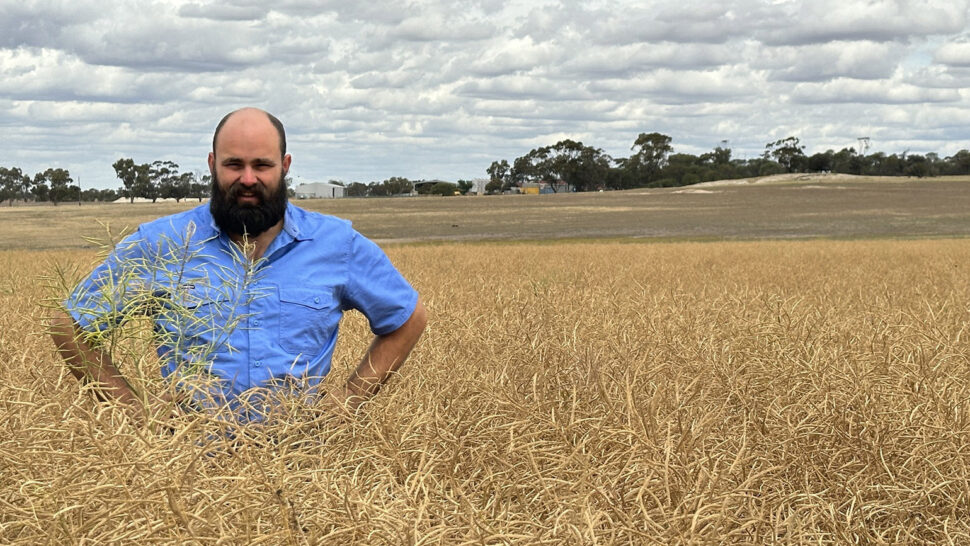
Main image: CFIG Project Officer David Storer standing in the small trial plots at Kweda prior to harvest in 2024. Source: CFIG.