
PhD Student Profile
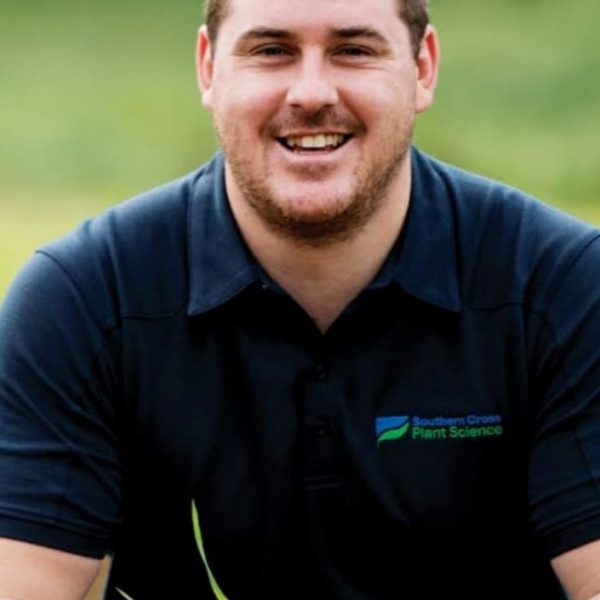
Dr Cameron Copeland
Southern Cross University
Australia’s diverse soils present unique challenges and opportunities for microbial technologies in agriculture. My PhD investigated what happens when a microbial community originating from one soil type, such as a calcarosol, is introduced into a distinct soil type, such as a red chromosol.
I used a combination of DNA amplicon sequencing (16S/ITS) and untargeted soil metabolomics (LC-MS) to understand how microbial composition and function shift when inoculated into soils with contrasting physicochemical properties.
PhD Title: “Understanding the Mechanisms of Soil Microbial Function and their Role in Cropping Systems.”
PhD completion date: December 2025
Supervisors: Prof Terry Rose, Southern Cross University, A/Prof Mick Rose, Southern Cross University, Dr Lukas Van Zwieten, Department of Primary Industries & Regional Development, Dr Abe Gibson, Southern Cross University.
What did your research find?
I found that while bacterial and fungal richness remained relatively stable after inoculation, the functional activity of the microbial community, reflected through metabolite profiles and carbon substrate utilisation, was significantly altered depending on the receiving soil.
Key findings include:
- Microbial activity, not just their identities, changes depending on the soil they are put into – Even when the types of microbes stayed mostly the same, what they did in the soil (e.g. how they processed nutrients) changed based on the soil environment. This was particularly applicable to fungal communities and suggests functional plasticity and strong environmental filtering.
- Changes in soil chemistry are linked to changes in microbial communities – When the type of microbes present in the soil changed, the way nutrients were utilised in the soil also changed.
- These microbial changes can affect wheat growth – The microbes influenced how wheat plants developed, including differences in root growth and early development – showing that soil life can directly shape how crops grow. In some cases, inoculated soils supported significantly different wheat shoot phenology and biomass, highlighting the downstream impact of microbial function on plant performance.
Ultimately, my research suggests that microbial inoculants may not behave uniformly across soils, and that soil context plays a crucial role in shaping microbial function and plant–microbe outcomes. These findings have important implications for the design and application of microbial amendments in broadacre cropping systems.
How will your research help to make a difference for farmers?
My research provides new insights into how microbial communities behave when introduced into different soil types and how they influence soil health and crop development.
By understanding these dynamics, we can help farmers and agronomists make more informed decisions about when and where microbial inoculants are likely to be effective.
What did you love about your PhD?
One of the most rewarding aspects of my PhD was learning from my supervisors. Each brought their own mix of professional insight and life advice that helped shape not just my research, but my perspective on science and work.
I really enjoyed the challenge of a doing a PhD – it pushed me out of my comfort zone, forced me to think differently, and gave me the chance to grow as both a researcher and a person.
Now that you have completed your PhD, what do you want to do next?
I’m completing a Master of Teaching at La Trobe University, after being accepted into the NEXUS program, which supports early to mid-career professionals transitioning into teaching. I’m excited by the chance to bring my scientific background into the classroom and help inspire the next generation of thinkers and problem solvers.
More information