
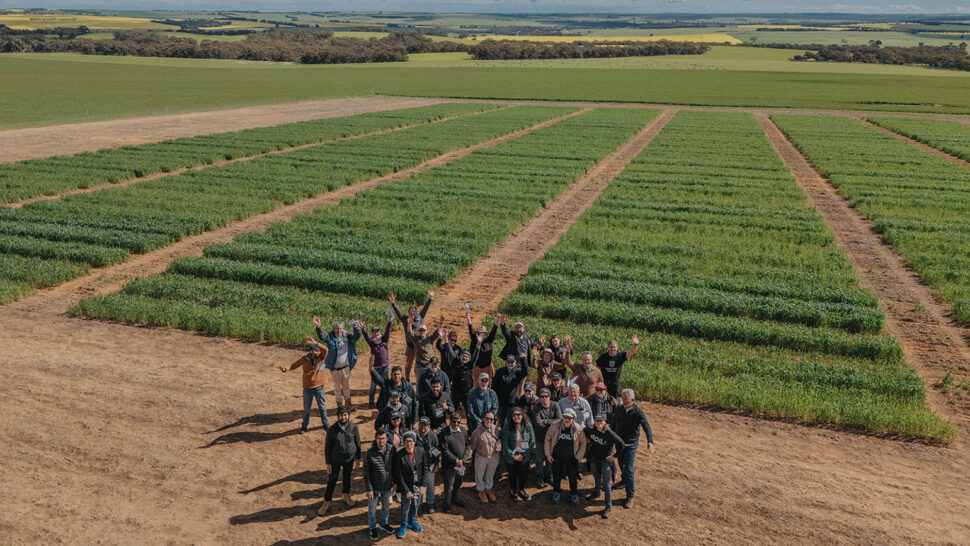
The 2025 Soil CRC Participants Conference concluded with 2 informative field trips to inspect some of our long-term experiments in the West Australian wheatbelt. Tour-goers were greeted by fields of green and gold as they heard about the challenges of farming on sandy soils and discovered how the Soil CRC is tackling them.
Trip 1: Northern trip to Wathingarra field site
West Midlands Group hosted the northern trip to the West Midlands region, led by Project Communications Officer, Simon Kruger. The first stop was an N-Banking trial site and soil pit at Velyere Farm, Dandaragan. This site is exploring how different nitrogen application strategies perform under local conditions, with treatments ranging from grower practice through to nitrogen banking and yield-potential approaches.
Next stop: the Wathingarra long-term site in Badgingarra, where a Soil CRC project is trialling stacking combinations of soil amelioration and organic amendments on deep red sands with severe water repellence. Established in 2021 and managed by West Midlands Group and Murdoch University, the trial combines deep tillage (mouldboard ploughing, rotary spading, shallow tillage) with organic amendments (compost, frass, biochar, zeolite, gypsum, clay, Ironman gypsum).
Simon said the field trip offered delegates an opportunity to connect their research focus with the practical realities of farming in sandy soils.
“Conversations at the Velyere soil pit and the long-term dataset emerging from Wathingarra showed how collaborative approaches between farmers, grower groups, and researchers can bridge scientific innovation and applied outcomes,” he said.



Trip 2: South-east trip to Kweda and Bullaring field sites
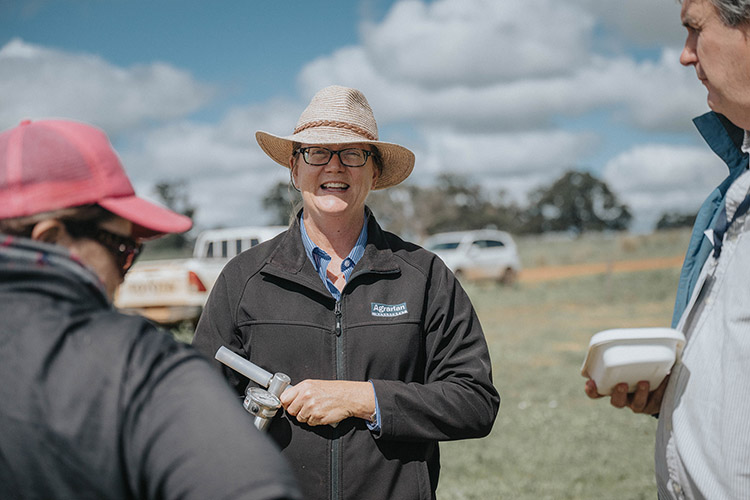
The second tour was expertly led by Emeritus Professor Richard Bell (Murdoch University) and hosted by Soil CRC grower group participants Corrigin Farm Improvement Group and Facey Group.
The first stop was at the Soil CRC’s long-term trial site in Kweda, which is on a sandy duplex soil. This experiment is evaluating a range of organic and inorganic amendment options, along with soil amelioration (deep ripping), to increase soil organic matter and water retention and ameliorate subsoil acidity.
Then it was onto Bullaring to inspect our long-term experiment on deep sand. The trial is using living plant systems and modern farming methods to sequester soil organic carbon, reduce greenhouse gas emissions and improve soil fertility.
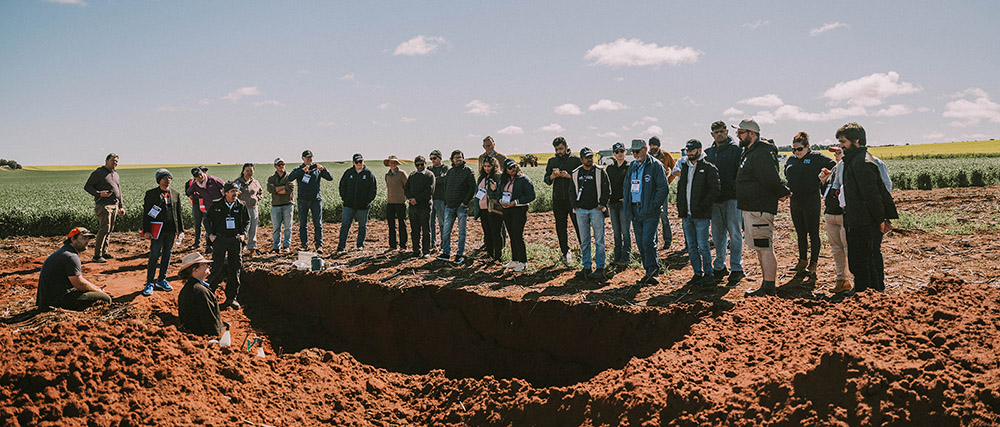
As always, the soil pit demonstrations were a winner with delegates, who were keen to jump in the pits to get their hands dirty and inspect the impacts of the treatments.
All three long-term trial sites are part of the Soil CRC’s ‘Evaluating novel approaches for drought resilience through long-term trials’ project which received funding from the Australian Government’s Future Drought Fund Long Term Trials program.
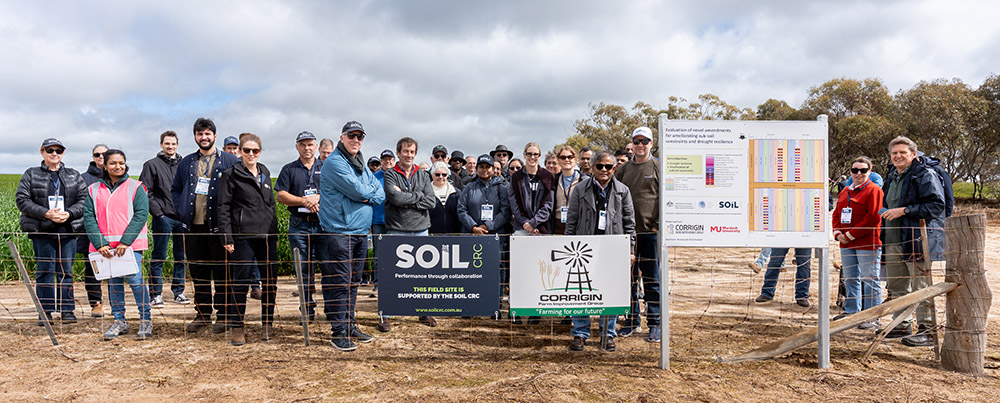


The Soil CRC would like to thank the field trip organising committee, led by Emeritus Professor Bell, generous site hosts, and our informative tour guides and presenters, who delivered a fantastic learning experience for participants.