
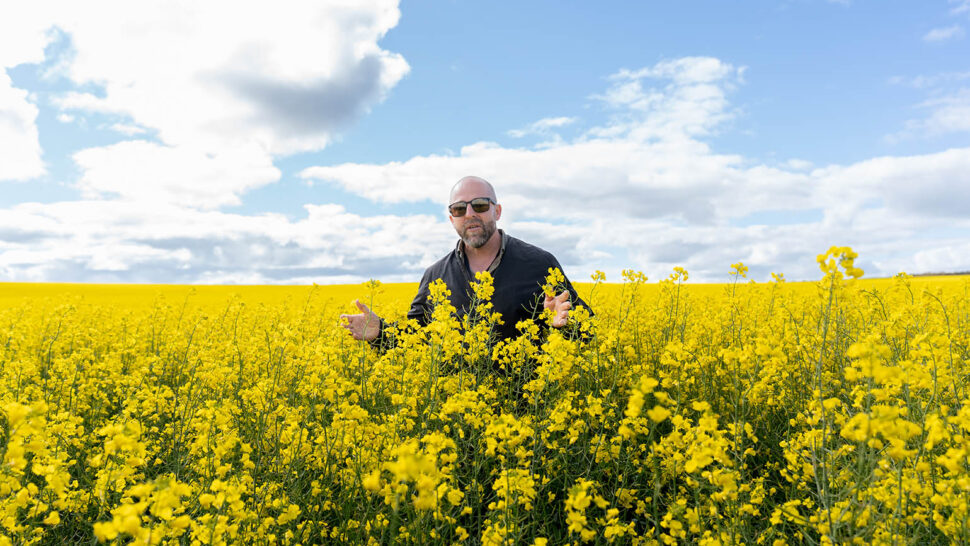
Unlocking financial investment in soils is the focus of the Soil CRC’s ‘Rewarding soil stewardship’ project (1.1.004) led by Dr Nicholas Pawsey from Charles Sturt University. The project is endeavouring to demonstrate a stronger link between good soil stewardship and financial profitability. This involves improving connections between researchers, growers and financial markets, and translating soil science for the finance sector.
“The project has engaged leading growers to capture their perspectives on the financial returns from soil best management practices and how these can be better recognised in financial decision-making,” Dr Pawsey said.
“The team has also worked with the Australian Accounting Standards Board (AASB) to understand current corporate soil reporting practices and the needs of agri-investors and bankers for enhanced disclosures on soil-related opportunities and risks.”
More recently, the project team completed a comprehensive review of empirical research on the financial costs and benefits of soil stewardship, providing an evidence base to support grower decisions and the team’s broader financial market activation efforts.
Stressing the importance of the review, Dr Pawsey said financial constraints and uncertainty about returns remain major barriers to the adoption of soil stewardship practices.
“There is a need to provide growers, bankers and investors with consolidated evidence on how alternative soil management strategies perform financially across different contexts,” he explained.
The team reviewed more than 80 published studies evaluating soil stewardship profitability in dryland broadacre cropping, analysing gross margins, net income, payback periods and net present value across diverse practices, locations and conditions.
“The review indicates that most soil stewardship practices rarely deliver negative returns, though profitability impacts are typically mixed due to factors like timing, crop type and location. Realistic financial metrics, risk considerations and sensitivity analysis are essential for growers making decisions,” Dr Pawsey said.
“These findings strengthen grower-financier conversations, helping financial markets better recognise soil stewardship value. They align with the Soil CRC’s mission to boost farm productivity and profitability through better soil performance.”
The review is summarised in the ‘Evaluating the financial costs and benefits of soil stewardship’ fact sheet.
Masterclass: Banking and investing in agricultural soils
Building on this research, the project team is hosting a Soil CRC masterclass on ‘Banking and investing in agricultural soils’ in February 2026 in Sydney, Melbourne and Brisbane. Targeted at bankers, investors and advisers, it will cover soil stewardship’s financial/co-benefits, key metrics, precision management and green finance opportunities. Registration and attendance is free.
Register for the ‘Banking and investing in agricultural soils’ masterclass.
Project participants
- Charles Sturt University
- Federation University Australia
- Birchip Cropping Group
- Riverine Plains
- Western Australian No-Tillage Farmers Association (WANTFA)