
By Felicity Harrop, Soil CRC Adoption Manager
Spring is a busy time of year for our grower groups and researchers as their calendars fill up with field days, presentations and extension activities. Our Adoption Manager provides a rundown of the latest Soil CRC events and activities, shares her key takeaways and provides details of where you can find more useful information.
Addressing multiple soil constraints: Field day and webinar
Healthy, productive soils are shaped by the interactions between soil structure, water, plants and biology. Recent Soil CRC research and extension activities are bringing these connections together, helping growers and advisers better understand what is happening beneath the soil surface and how management can influence soil performance.
Underperforming soils rarely have a single problem. Physical, chemical and biological constraints can interact to limit root growth, water availability and crop performance. Soil CRC research is exploring integrated approaches to improve soil function.
Soil CRC participants Facey Group, SPAA, Riverine Plains, Central West Farming Systems, SARDI, Southern Farming Systems (SFS) and Birchip Cropping Group (BCG) hosted Soil CRC researchers sharing decision support tools, integrated management practices to address multiple soil constraints and the influence on accessing soil water.
The BCG soil pit illustrated multiple soil constraints farmers are managing including a compaction layer around 10 cm with increasing alkalinity, exchangeable chloride, exchangeable sodium and boron at depth potentially restricting productivity.
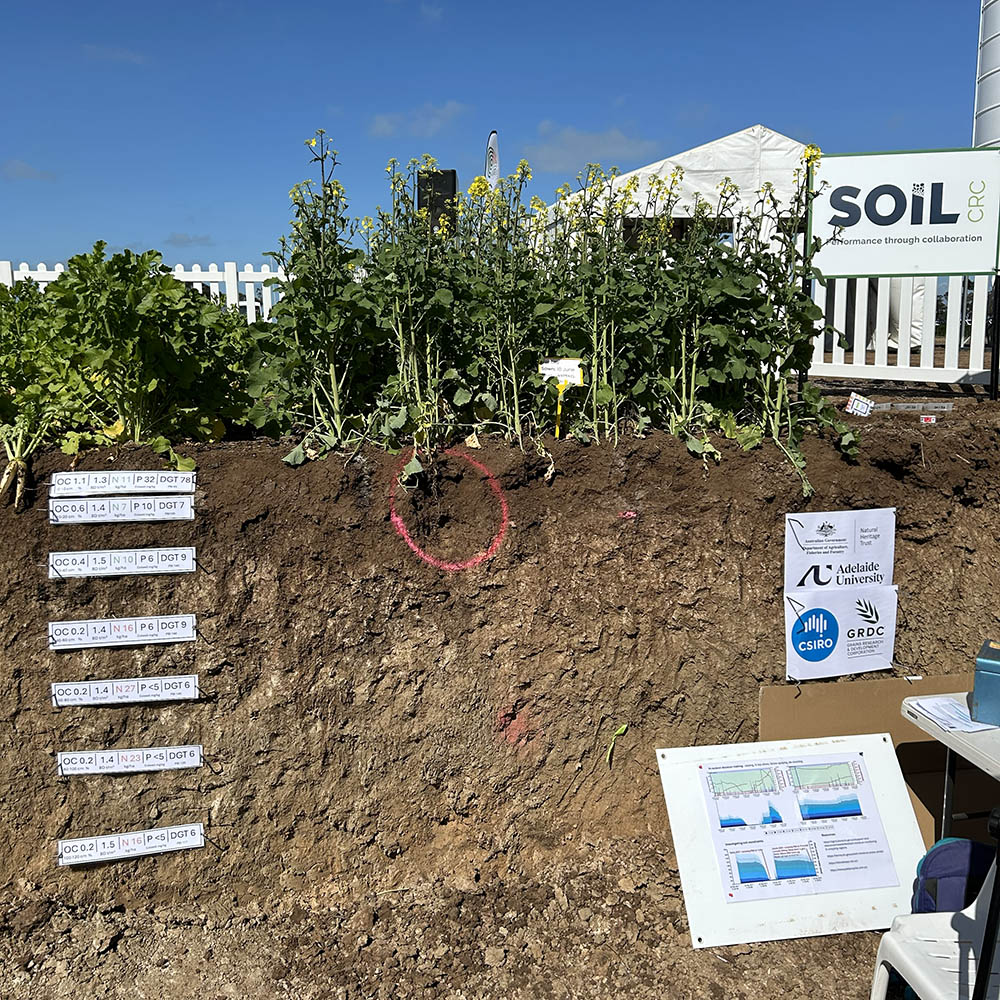
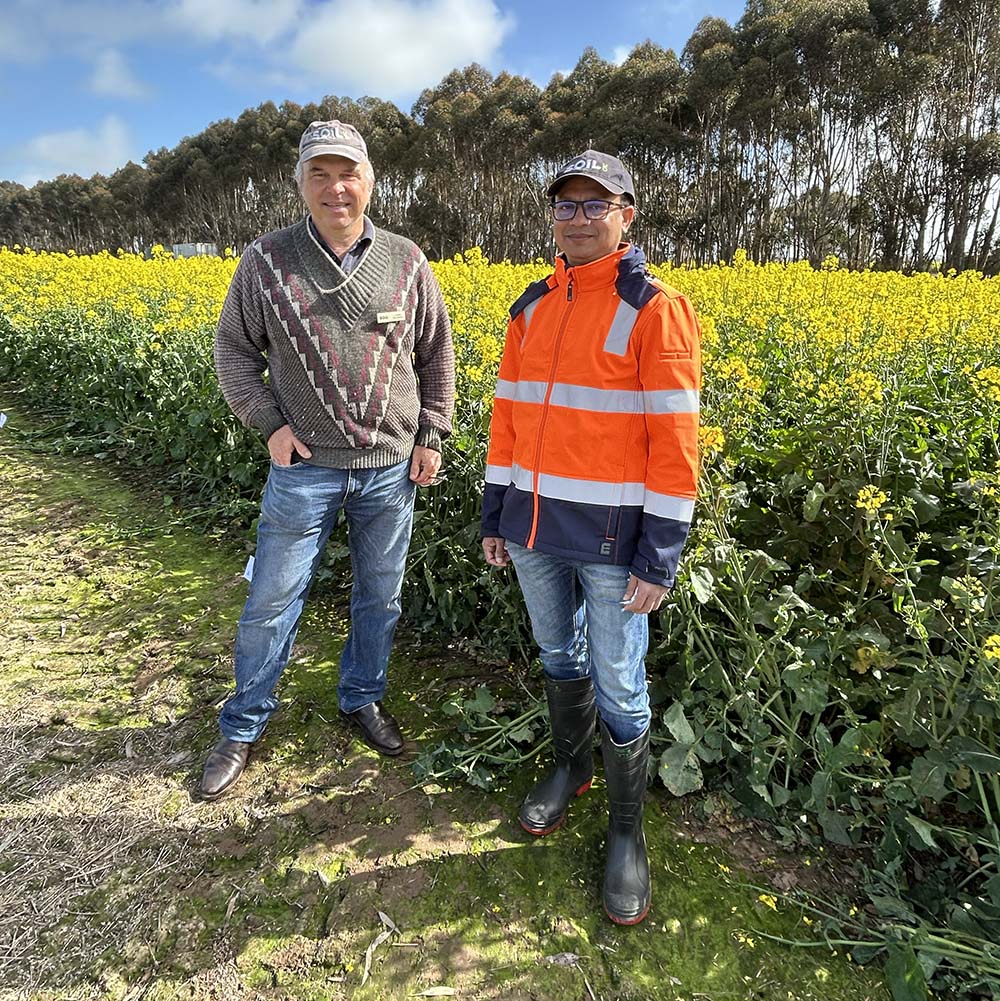
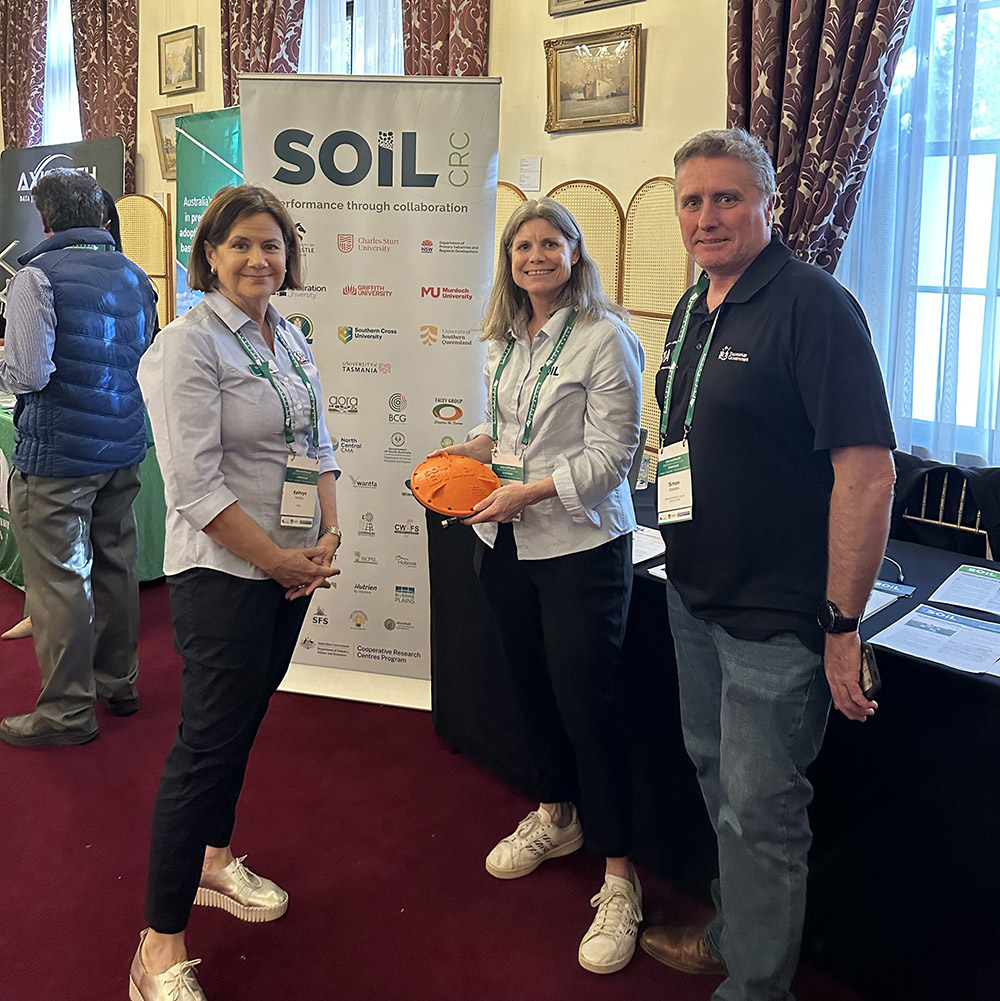
From left to right: The BCG soil pit illustrating multiple soil constraints; Dr Lukas Van Zwieten (NSW DPIRD) and Santosh Paul (University of Newcastle) at the SFS biochar trial site (Project 3.1.008); SPAA Project & Executive Administrator Kathryn Purcell, Soil CRC Adoption Manager Felicity Harrop (with the BILBY® wireless communication node) and University of Tasmania agtech innovator Simon Edwards at SPAA’s Precision Agriculture Symposium.
In our July webinar ‘Integrated solutions for underperforming constrained soils’, Dr Lukas Van Zwieten (Soil CRC Program 4 Leader, NSW Department of Primary Industries and Regional Development) and Dr Shihab Uddin (NSW Department of Primary Industries and Regional Development) shared the latest research into practical solutions for sodic and dispersive soils, with a focus on improving subsoil conditions to unlock crop productivity.
The webinar explored:
- Why sodicity remains one of Australia’s most significant soil constraints
- How poor subsoil structure limits root growth, water use and nutrient access
- Results from long-term field trials in New South Wales and North Queensland
- The benefits of deep-banded gypsum, organic amendments and other amelioration strategies
- Evidence showing yield improvements of up to 15% over multiple seasons through targeted subsoil management
- New decision-support tools being developed to help growers assess soil constraints and identify economically viable remediation options (see our September newsletter story for details).
The research highlights the importance of placing amendments directly into subsoil layers, with the greatest benefits observed during drier seasons when crops rely on deeper soil moisture. This webinar provides valuable insights into improving soil performance and long-term profitability through integrated soil management.
Learn more
October webinar: Improving soil performance: Practical application of plant-based solutions and their impacts on soil water
Plant diversity plays a critical role in supporting healthy, resilient soils, yet many Australian grain and sugarcane production systems rely on a limited range of crop species. Drawing on research from grain and sugarcane systems, the Soil CRC’s October webinar will explore the opportunities and trade-offs of using cover crops, including their potential to build more resilient soils and their impacts on soil water availability compared with conventional management.
The webinar will cover:
- Options to increase plant diversity and soil resilience while managing potential risks to future cash crop production.
- The impact of those management practices on soil function and crop yields.
- How crop water availability is controlled by the soil.
- How changing soil management affects those mechanisms.
Professor Terry Rose (Southern Cross University) will share regionally specific insights into how practices such as cereal-legume intercropping and cover cropping can improve soil performance while maintaining productivity. This will include where and when to get the best bang for your buck with the potential risks and rewards.
Dr Alice Melland (University of Southern Queensland) will present research exploring how soil properties and management practices influence crop water availability and yield across key grain-growing regions, and how better understanding of soil water storage can support more informed decisions about soil management, crop selection and water use.
The webinar will be held on 9 October from 12.30–1.30pm AEDT.
New research fact sheet: Soil microbial indicators – What do they mean and how can they be used?
There is growing interest in using soil microbial measurements to understand soil health and soil function. But what do the different indicators actually tell us, and how can the results be used? Research led by Associate Professor Mick Rose (Southern Cross University) is helping to determine which biological indicators provide useful and practical information for growers.
The new Soil CRC research findings fact sheet, ‘Soil microbial indicators: what do they mean and how can they be used?, provides a practical introduction to soil microbial indicators and the information they can provide.
Coming up: Soil CRC participant events
October field days round out the field day season with Soil CRC researchers presenting at Southern Farming Systems (Victoria) and MacKillop Farm Management Group (South Australia) field days. Topics include soil indicators, biological indicators, herbicide residue management, and plant diversity soil health benefits.
- Associate Professor Nathan Robinson and Dr Richard MacEwan (both Federation University) will be making sense of soil indicators in the soil pit.
- Dr Abe Gibson (Southern Cross University) will discuss plant diversity for soil improvement.
- Associate Professor Mick Rose (Southern Cross University) will present research outcomes from the biological indicators and managing herbicide residues in soil projects.
Visit the Soil CRC events webpage for dates, locations and registration details.
Thank you to our Soil CRC participants for taking the time to generously share these research outcomes with agricultural communities far and wide.
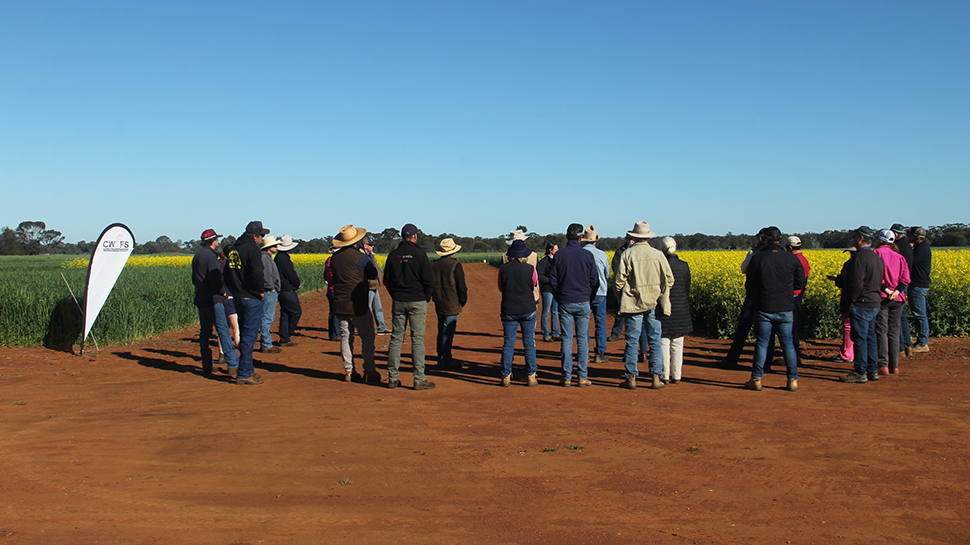
Main image: Farmers at the Central West Farming System Spring Field Day listening to Professor Terry Rose talk about our plant diversity field trial.