
By Felicity Harrop, Soil CRC Adoption Manager
Soil CRC participant Riverine Plains recently completed a federally-funded project to extend results from the Soil CRC’s ‘Building soil resilience and carbon through plant diversity’ project (4.1.007) in north east Victoria, with the aim of supporting farmers to adopt land management practices that protect soils and enhance soil moisture retention. The extension project was delivered as part of the Regional Drought Resilience Planning Program and supported through funding from the Australian Government’s Future Drought Fund and the Victorian Government.
The project demonstrated that increasing plant diversity — through summer cover cropping and winter companion cropping — provides opportunities to strengthen farming systems against drought and long‑term climate variability. The outcomes support resilience in several interconnected ways.
Jane McInnes, Riverine Plains Head of Farming Systems, identified the opportunity to communicate the project’s key messages using farmer-friendly resources. The Riverine Plains team shared local farmer experiences with trial research in the paddock and online, provided clear explanations of the farming practices assessed, and contextualised implementation for their local farming systems. In doing so, they transformed complex, data-heavy findings into accessible stories.
Riverine Plains Senior Communications Manager, Michelle Pardy, said the Soil CRC project generated a lot of data, and noted that there is a lot of interest from farmers in integrating pulses, such as vetch and faba beans, into their farming systems.
“This extension project allowed us to identify key messages and create additional farmer resources, while also providing a legacy for the Soil CRC project,” she said.
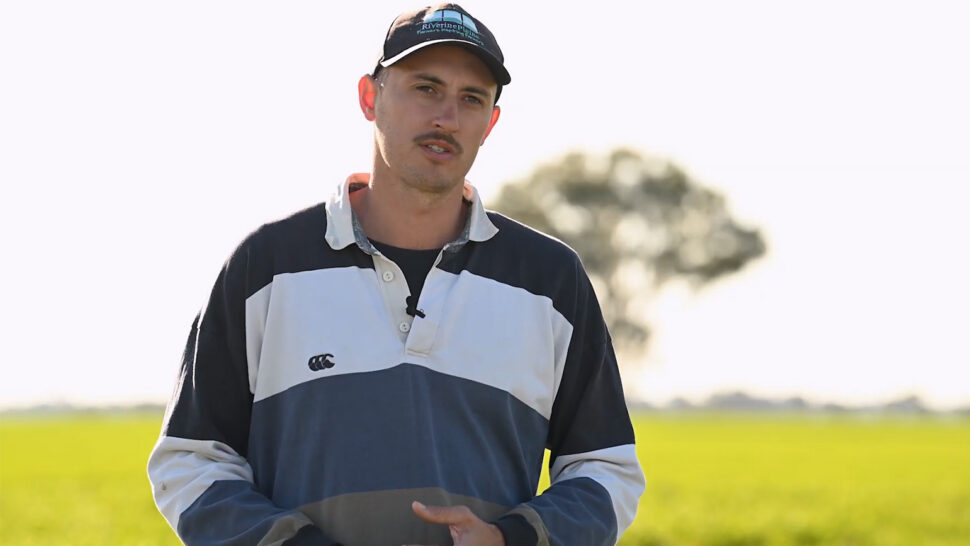
“Farmers value other farmers’ experiences, so having respected Waggarandall farmer Tony Ludeman share his insights and experiences of companion cropping vetch and wheat, supports other farmers’ decision making around adopting these practices.”
Tony’s insights were captured in a case study and online video, which has been viewed over 400 times since it was released two months ago.
As part of the project, the Riverine Plains team interviewed Soil CRC researcher Dr Abe Gibson from Southern Cross University, who clearly explained the difference between summer cover cropping and companion cropping versus intercropping, and considerations for implementation in the local environment. Abe also shared the economic impacts of the practices, highly valued by farmers when deciding on new farming practices. Watch Abe’s video here.
The Riverine Plains team is looking forward to sharing the final results of the ‘Building soil resilience and carbon through plant diversity project’. With additional economic analysis and future updates planned, the project continues to evolve — ensuring farmers have practical, trustworthy information to guide decision making.
Soil CRC CEO, Dr Michael Crawford, said it is fantastic to see our farming systems groups take the Soil CRC research they have been involved in and tailor the findings and key takeaways to their farmers and their region.
“We are seeing the clear benefits of this approach in our Accelerator Program, led by Bret Ryan from Southern Farming Systems, where our participant grower groups are helping to identify the most appropriate delivery pathways for our research outputs and innovations.” he said.
“The collaboration with our expert farming systems groups is a key strength of the Soil CRC and its ability to deliver impactful research to those who will benefit most — the work by the Riverine Plains team to extend our research findings to their farmers exemplifies this.”
Thank you to Riverine Plains for identifying this extension opportunity and creating excellent resources sharing valuable Soil CRC research far and wide.
Find out more
- Project webpage: Extending results from the Soil CRC Plant Diversity project