
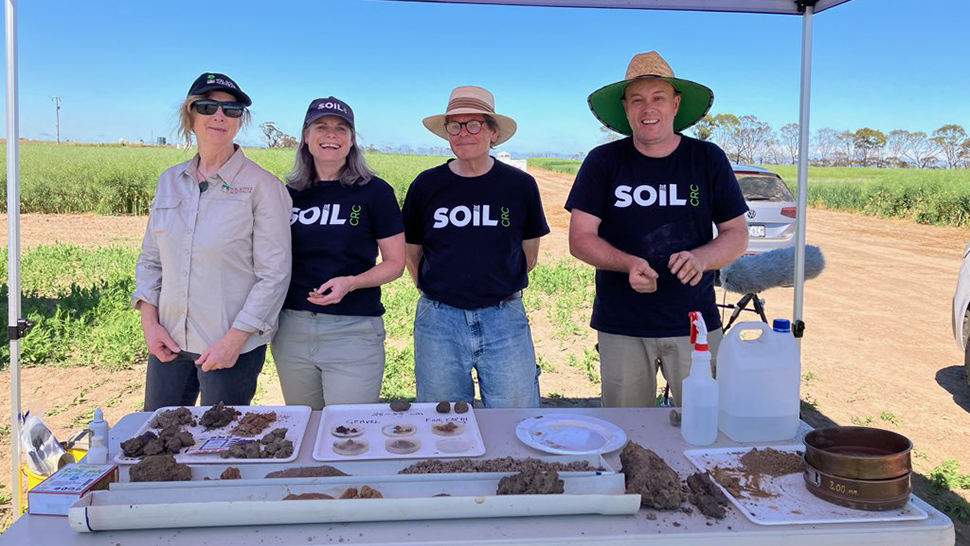
December webinar explores soil microbial indicators
Soil biology is at the heart of productive, resilient farming systems, but with so many soil health tests available, how do you know which indicators provide meaningful insights and support better management decisions?
Join us for an engaging webinar exploring the latest findings from the Soil CRC’s research on soil microbial indicators and their practical applications for Australian farming systems. The research evaluated more than 400 soil samples across multiple Australian farming systems and assessed a wide range of biological indicators to determine which tests provide the most valuable information for growers and advisers.
Unlock the Power of soil biology: Which soil microbial indicators really matter?
Date: 3 December
Time: 12.00pm – 1.00pm AEDT
Location: Online via Zoom
What you will learn:
- Why soil biology is critical for soil health, crop performance and resilience.
- Which soil microbial indicators are most useful for practical on-farm monitoring.
- How low-cost ACE soil protein testing compares with other biological measures.
- The strengths and limitations of DNA-based testing.
- How to use microbial indicators alongside soil chemistry, soil physics and crop performance data to make more informed management decisions.
Discover how to move beyond soil health scores and use soil biology testing as a practical decision-making tool for your farming business.
Presenters:
- Associate Professor Michael Rose, Southern Cross University
- Dr Kattie Weigh, NSW Department of Primary Industries and Regional Development
Register now
New soil resources
Beyond soil carbon – Wheatbelt NRM fact sheet
Soil carbon is often seen as the ultimate measure of soil health, but building carbon is rarely a quick or straightforward process.
Developed by Soil CRC participant Wheatbelt NRM, this fact sheet highlights the broader benefits of management practices that improve soil function, resilience and productivity.
Drawing on findings from two Soil CRC research projects, the fact sheet examines how soil amelioration, amendments and plant diversity can influence soil carbon and overall soil performance. It covers practices such as deep ripping, clay and organic amendments, crop rotations, legumes, cover crops and intercropping, while outlining the potential benefits and trade-offs of each approach.
Importantly, the research reinforces that there is no single pathway to increasing soil carbon. Outcomes depend on soil type, existing constraints, management practices and seasonal conditions. Even where carbon gains are modest, practices that support soil health can still deliver valuable improvements in productivity, water use efficiency and system resilience.
Download the fact sheet and discover how investing in soil health can deliver benefits that extend well beyond carbon alone. This fact sheet was published as part of the Soil CRC’s Adoption Plan implementation activities.
Solutions for accessing soil moisture field walk with FarmLink
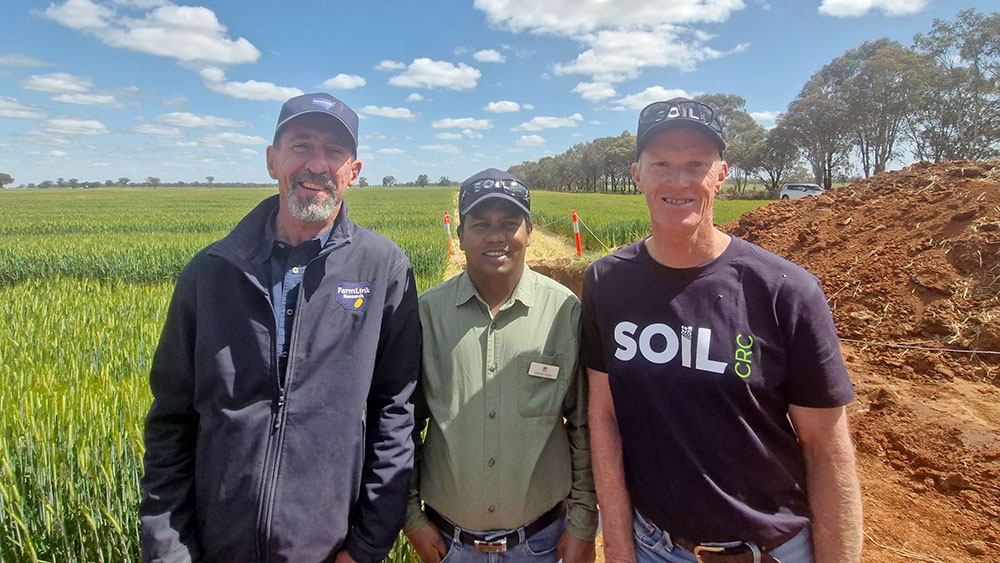
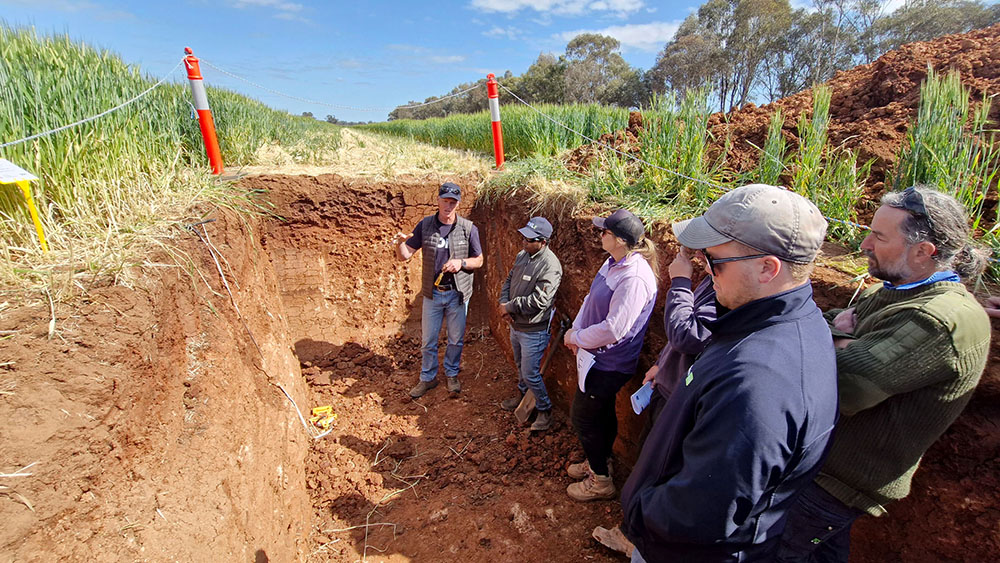
Following on from the July Soil CRC webinar, on our ‘Integrated solutions for accessing soil moisture’ (4.2.004) project with Dr Shihab Uddin (NSW DPIRD), FarmLink hosted a field day at the trial site south of Lockhart in NSW. FarmLink Principal Research and Extension Manager Mark Skewes said, “the soil pit demonstration and discussion with Sam North was excellent, discussion of soil amelioration trial was positive and, the intercropping presentation generated good discussion”.
Thanks to the Benders family for hosting the trial on their farm and to the Soil CRC presenters Dr Uddin, hydrologist Sam North, and PhD student Hayden Thompson (Southern Cross University) who is investigating plant-based solutions to improve soil performance.
Read the project report here: Integrated solutions for underperforming constrained soils: Accessing soil moisture – Final project report
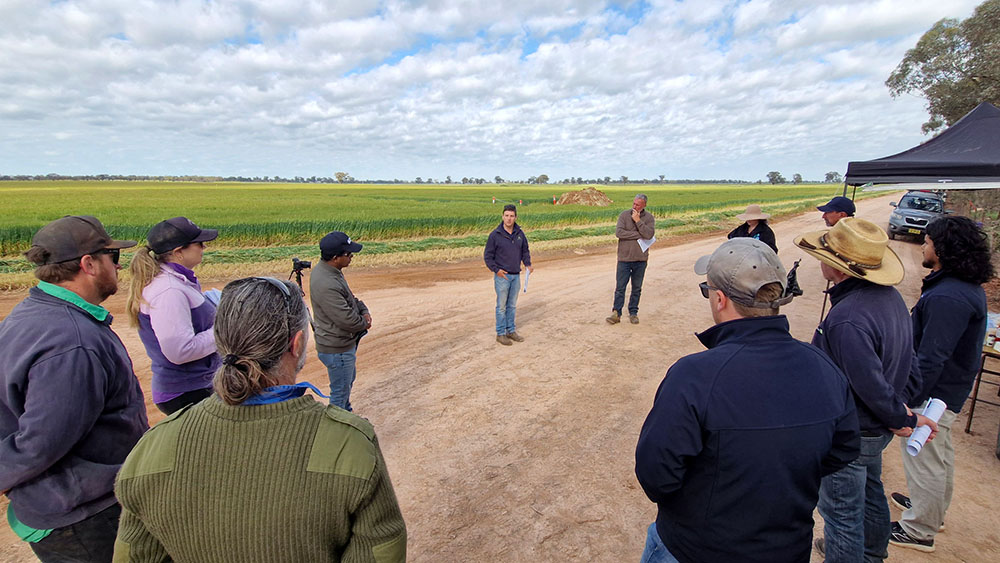
Southern Australia field days
October field days rounded out the field day activities delivered by Soil CRC participant grower groups, with Soil CRC researchers presenting at the Southern Farming Systems (Victoria) and MacKillop Farm Management Group (South Australia) field days. Topics included soil indicators, biological indicators, herbicide residue management, and the soil health benefits of plant diversity.
- Associate Professor Nathan Robinson and Richard MacEwan (both Federation University) made sense of soil performance indicators in the soil pit, highlighting the importance of understanding chemical soil issues below the surface before implementing physical interventions such as deep ripping or soil inversion which may exacerbate soil constraints and impede plant production.
- Dr Abe Gibson (Southern Cross University) discussed plant diversity for soil improvement.
- Associate Professor Mick Rose (Southern Cross University) presented research outcomes from the biological indicators and managing herbicide residues in soil projects.
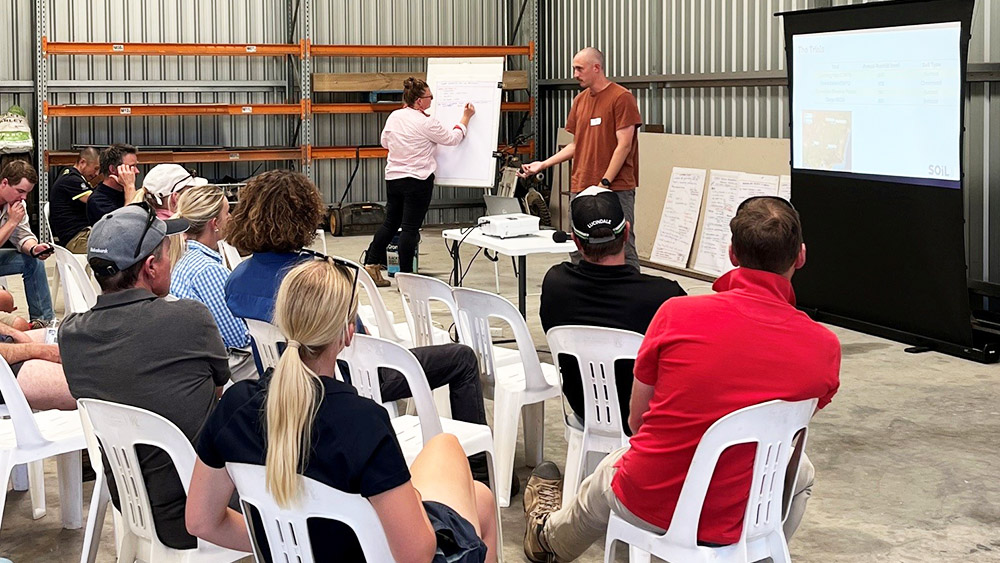
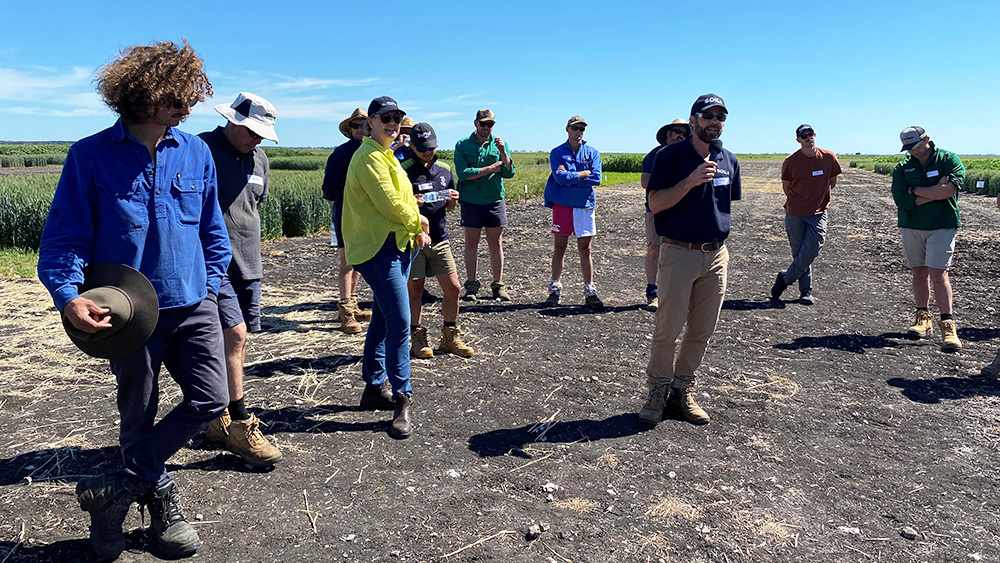
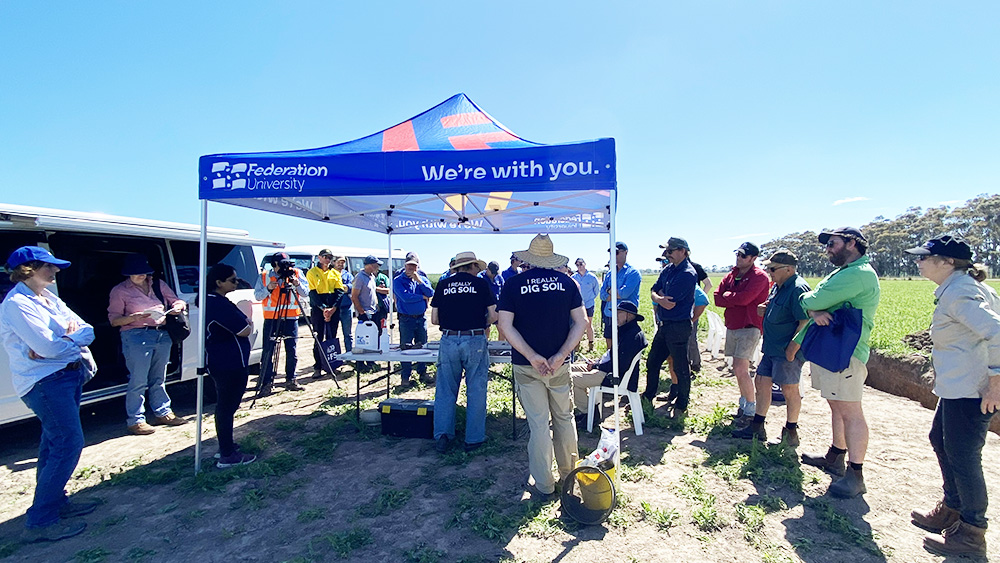
Thanks to our Soil CRC participants for taking the time to generously share these research outcomes with agricultural communities far and wide.