
Year in Review
2025 highlights
- We approved funding for 4 new research projects
- We welcomed a new PhD student and saw 8 students complete their PhD
- We listed the BANDICOOT® smart penetrometer and QUOLL® eNose sensor on the AgriFutures growAG website
- We lodged a patent application for aspects of our ‘Lab on a Chip’ device
- We commenced the Future Drought Fund Long Term Trials project
- We delivered 7 webinars and supporting fact sheets to help NSW farmers make evidence-based decisions to support carbon farming
Investing in high performance soils
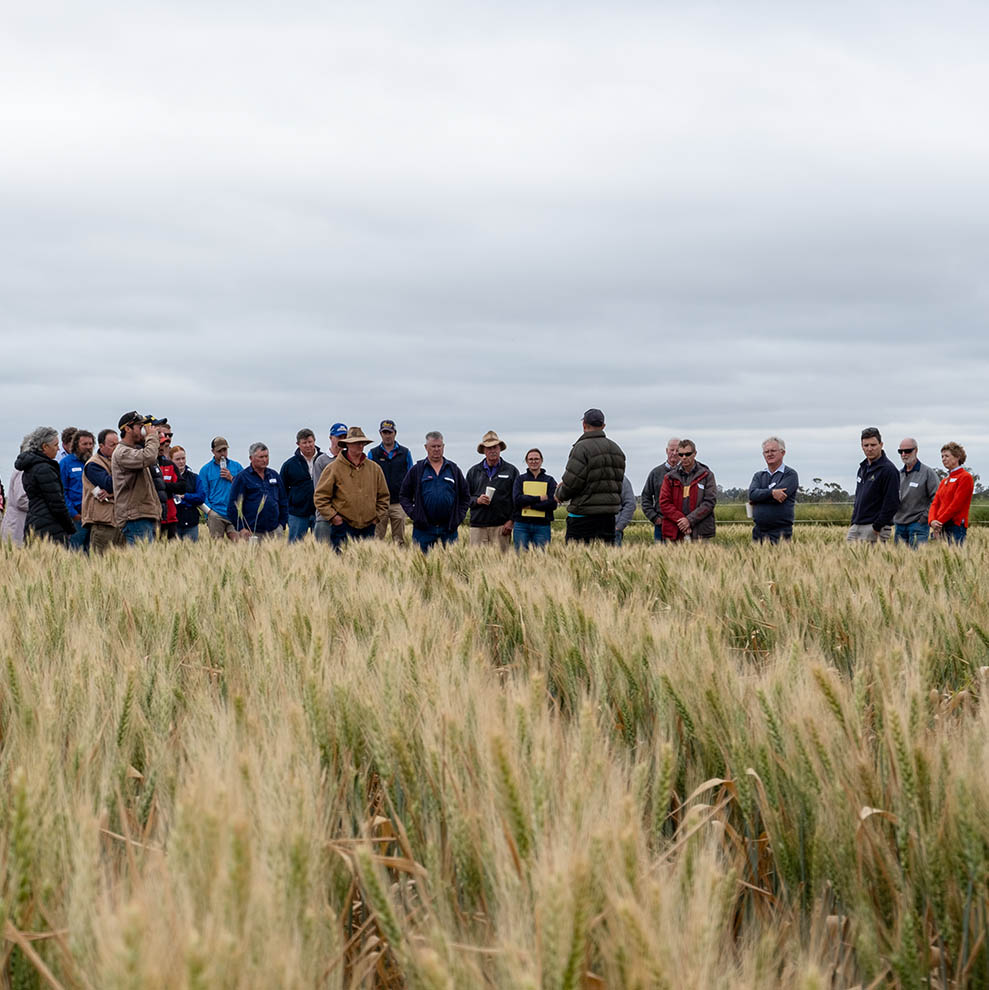
Research activities in Program 1 are focused on social and economic aspects of soil stewardship. Useful and productive collaborations among university-based researchers and practitioners from farmer and industry groups continued to build over the past year.
Work in Program 1 continued to develop an extensive public-good package of information and capacity-building resources for researchers, farmer groups and Soil CRC partners.
Our researchers continued their work to improve reporting standards for soil management, completed 2 social benchmarking landholder surveys and initiated 2 more, created new tools for farmers and advisors, and catalogued all Soil CRC projects to support wide uptake of outputs.
Program Leader

Soil performance metrics
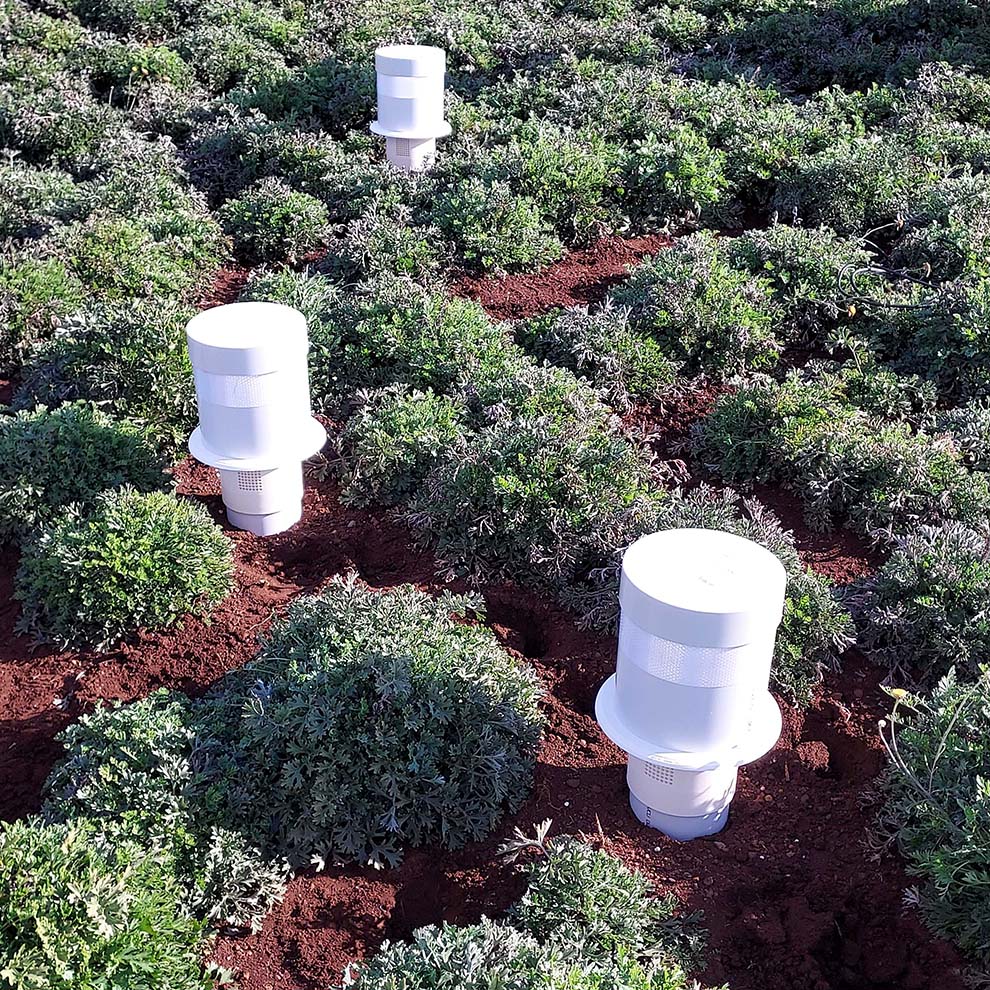
Program 2 is focused on understanding and developing indicators of soil performance, aiming to improve soil productivity, sustainability and profitability. The program involves 20 grower groups, 7 universities, 4 government research partners, and 12 PhD students working on tools and information that help farmers enhance soil management.
Progress included developing tailored soil indicators for farmers and advisors; further commercialising sensor technologies – the BILBY® underground communication node, BANDICOOT® smart penetrometer and QUOLL® soil e-nose; and enhancing the Lab on a Chip device and securing $400,000 from Sugar Research Australia to apply the technology to sugarcane nutrient testing.
Researchers also commenced the third phase of Visualising Australasia’s Soils (aimed at establishing a lasting online soil data platform), and advanced soil water modelling, machine learning and sensor data fusion.
Program Leader
New projects for soil fertility and function
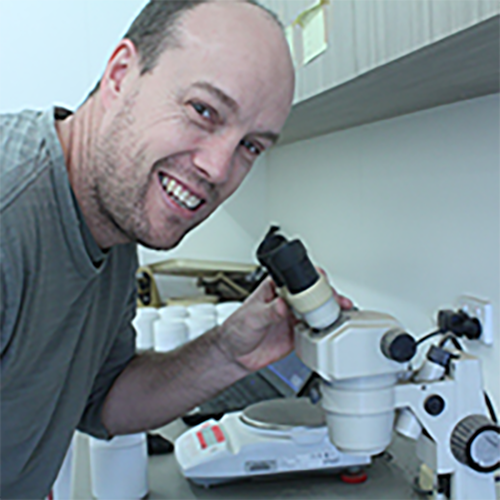
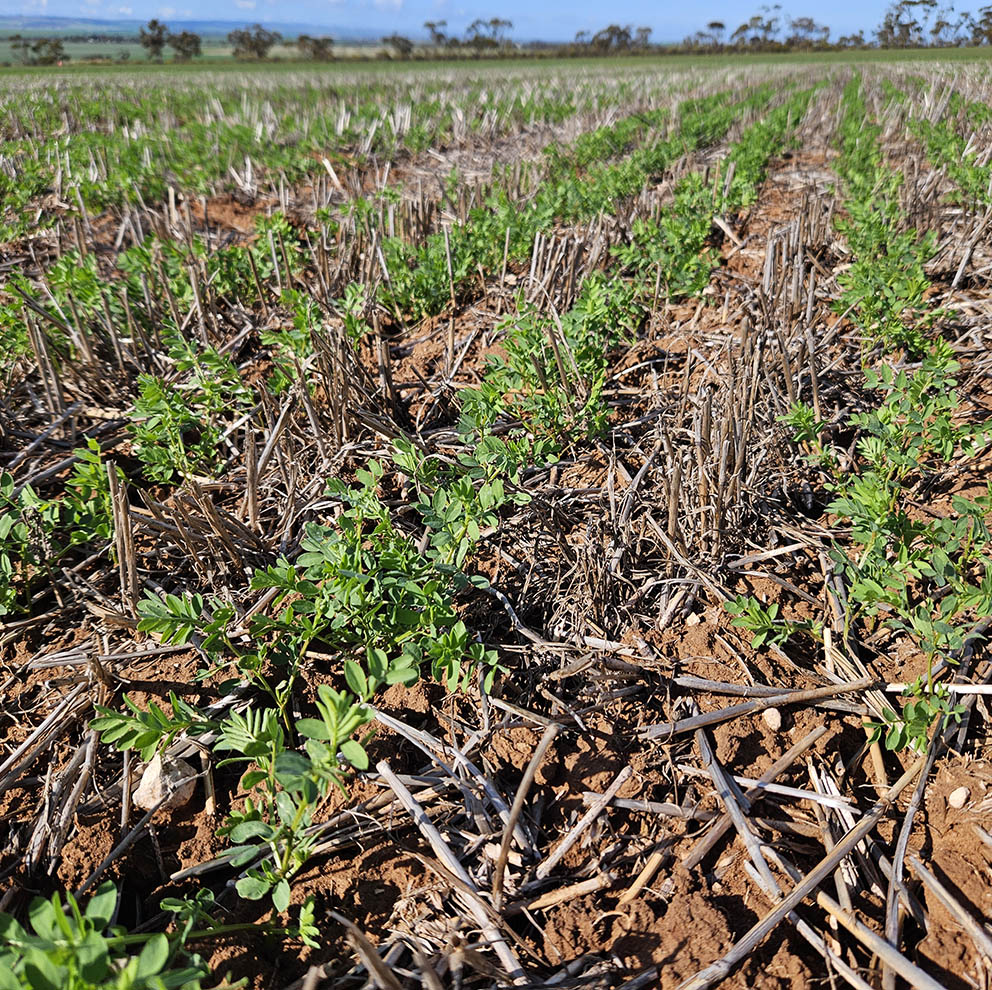
Program 3 continued developing new fertiliser formulations, pesticide delivery systems, soil enhancements, microbial carrier products and improved mechanisms for delivering these solutions to farmers. These pursuits collectively aim to enhance soil performance and productivity for farmers.
Studies showed that organic amendments may enhance early nutrient dynamics, and earthworm liquid and pyroligneous acid enhanced phosphorus use efficiency in soil.
Our researchers also initiated field trials using biochar from biosolids to understand the impact on soil; manufactured and began evaluating 3 novel organic nitrogen fertiliser products; developed locally sourced, eco-friendly, high moisture retaining organic-based and clay-based materials with commercial potential; and created 4 promising microbial carrier formulations.
Program Leader
Integrated soil management solutions
Program 4 aims to develop cost-effective and sustainable soil management solutions to build more productive and resilient soil. In 2024-25, the program oversaw more than 11 field sites, strategically located with grower groups and research organisations, addressing multiple soil constraints.
Research continued evaluating cover cropping, mixed-species cropping, intercropping and regenerative agriculture in Australian conditions. Significant progress was made to ground truth the role of cover crops and assess how these systems-based methods can increase soil carbon and resilience. Other research highlighted the need for site-specific ecosystem management to maintain soil resilience and sustainable productivity.
Ongoing trials provided insights into optimising novel physio-chemical interventions for different soils and climates. A major milestone was the completion of a knowledge-guided model for constraint-specific amelioration, now ready for integration into next-generation decision support tools.
Program Leader
Case Study
New farming methods to sequester soil carbon
Many Western Australian farms have sandy soils with low organic carbon, characterised by low water-holding capacity, poor nutrient retention and reduced productivity. These soils also limit opportunities to participate in carbon markets, which depend on measurable carbon gains. For grain growers across the state, improving productivity, building resilience and accessing new market opportunities can be supported by finding ways to increase soil organic carbon.
To address this challenge, the Soil CRC partnered with the Western Australian No-Tillage Farmers Association (WANTFA), Murdoch University and grower groups including Facey Group, Corrigin Farm Improvement Group, West Midlands Group and Liebe Group. With additional funding from the Western Australian Department of Primary Industries and Regional Development, they established 4 large-scale trial sites (Bullaring, Coorow, Kweda and Wathingarra) across the WA wheatbelt to test new farming methods aimed at boosting soil fertility and sequestering carbon.
The ‘New farming methods to sequester soil carbon’ project (4.1.006) compared 5 approaches:
- Traditional crop rotations
- Crop sequencing with mixed species of pasture and crop
- Soil amelioration including deep ripping, clay incorporation, mouldboard ploughing and rotary spading
- Soil amendments including compost, manure, organic pellets, frass, gypsum, clay, zeolite and biochar
- Combinations of the above.
Pathways to improving sandy soils
The sites demonstrated that there is no single solution for building carbon in WA’s sandy soils. Instead, combinations of approaches will be required, adapted to soil type, rainfall and farming system.
At Kweda, combining compost with deep ripping showed promise for reducing subsoil constraints and improving water use efficiency, but compost alone was less effective.
The Bullaring trials compared legumes and legume intercropping alongside mechanical disturbance and clay incorporation. Both strategies improved soil fertility, but in different ways. Growing legumes contributed to soil carbon through plant residues, while the mechanical treatments improved nutrient retention and reduced weed competition for soil moisture.
At Wathingarra, rotary spading and mouldboard ploughing boosted serradella biomass. Biochar and frass applications improved nutrient uptake and showed signs of longer-term fertility benefits. Compost gave a short-term boost, but its impact declined after 3 to 4 years, and higher weed pressure was observed where compost was applied.
At Coorow, where cropping history was limited, clay and organic matter increased water holding capacity and early plant growth, but longer-term monitoring will be needed to confirm the effects.
Patterns across the sites
Overall, the trials showed that improvements in soil fertility were greatest when amendments were combined with physical amelioration. Water-holding capacity and nutrient retention increased, helping crops make better use of rainfall and fertiliser. The yield responses were more modest and often declined by the third year.
“On these low-fertility sands, yield is often the focus, but what stood out was how the soil itself improved. Better water-holding capacity and nutrient retention give us a foundation to build on,” said Dr David Minkey, Soil CRC Project Leader and Chief Executive Officer of WANTFA.
Carbon gains were small and variable across the sites, which was expected given the short timeframe of the project. Building soil carbon is a slow process, especially in sandy soils with low clay and organic matter. However, the combination of crop sequencing, soil amelioration and amendments showed the strongest potential for achieving long-term gains.
This isn’t a quick fix. You don’t see huge jumps in carbon in these soils in just a few years. But the results show we can make these soils healthier and more productive now, and set them on a pathway to storing more carbon in the future.
Dr David Minkey, Soil CRC Project Leader
What’s next
Three of the sites will continue under a new Future Drought Fund-supported Soil CRC project. This research will capture seasonal variation impacts on results and provide a stronger evidence base for how different practices affect soil health, carbon and crop performance.
Dr Minkey said the long-term perspective is essential. “We need to know not just what works in year one, but what still delivers after 5 or 8 years. That’s when farmers can really weigh up the economics and decide which practices are worth investing in.”
Funding acknowledgment
The project received funding from the Western Australia Department of Primary Industries and Regional Development through the Future Carbon Program, with additional funding being provided by the Soil CRC.
PhD student program
The Soil CRC’s PhD student program underpins our 4 research programs to build capability in the future of Australia’s soil research.
Our PhD cohort brings together a huge wealth of knowledge, experiences, professional networks, and capabilities for our students to engage with and learn from.
Students are enrolled at 12 universities across Australia, are aged between 26 and 76 years, and reflect a wide range of disciplines and cultural backgrounds.
In 2024–25, we welcomed a new PhD student and saw 8 students complete their PhDs, bringing the total number of active students to 32 and the total number of completions to 15.